Review: Trust and Power in The Three Musketeers
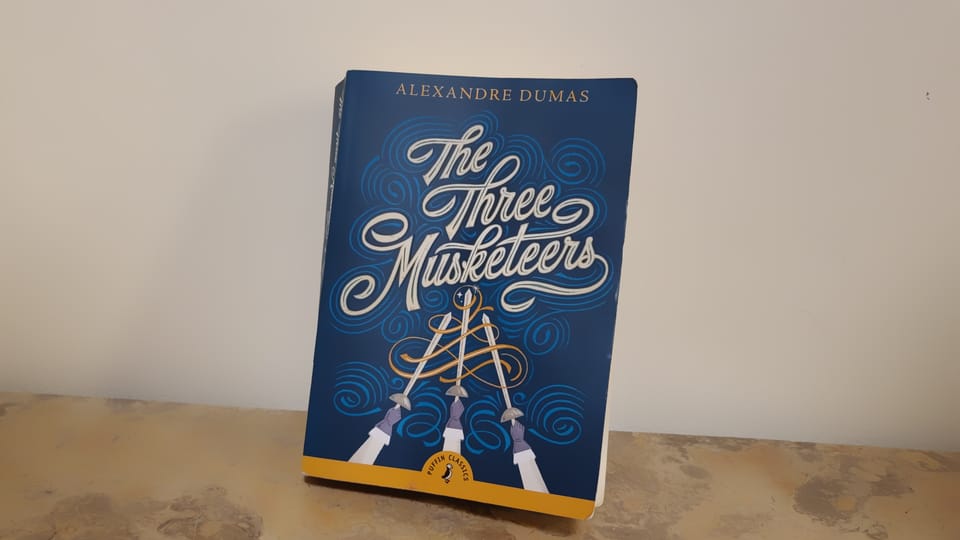
Every two weeks, my English lesson takes place in the library where we students are entitled to a full hour of quiet reading. While the term ‘quiet reading’ was quite unfamiliar with my classmates, my eyes fell upon a book on a shelf.
Personally, I was well-acquainted with Alexandre Dumas’ The Three Musketeers. My grandfather had bought the book for me as he had enjoyed it himself when he was around my age. Stirred, I reread the novel at the library. As always, it remained a curious blend of both history and adventure, yet The Three Musketeers revealed more than my previous self had discovered.
The morning of the first Monday of April 1625 had broken into a wild feverish excitement. Doors and windowsills flew open as women and children all flocked to one side or the other. Noblemen kicked the doors out of their houses open, red-eyed, their rough hands seizing their smooth muskets. What had drawn the crowd to unanimous chatter and wide eyes was the arrival of a new, distinctly Gascon man, around eighteen in age.
The man was d’Artagnan, hot-tempered and ambitious, who had left his provincial home to seek glory among the King’s Musketeers in Paris, widely regarded as the most prestigious regiment in France. Yet, he was a stranger in the big city with no relations or preexisting knowledge whatsoever. A few missteps quickly brought him into conflict with three of the King’s finest Musketeers - Athos, Porthos, and Aramis, also known as the Three Inseparables - quarrels that soon gave way to friendship and the bond that would define his adventures.
As I realised after I had read the book, The Three Musketeers was more than a tale of brotherhood. While the stereotype often goes of how the king is bestowed with ultimate power over his subjects, The Three Musketeers seemed to satirise the very existence of those beliefs. I found that the trepidated King Louis XIII could not come to any conclusion or decision without the help of his own advisors.
Namely, the Cardinal, a powerful advisor regarded as the primary villain in the story, and Monsieur de Tréville, the Captain of the prestigious Musketeers. In their constant tug-of-war, the king appeared less a ruler than a figure pulled between rival factions. What struck me most was that real influence rested not in the throne itself, but in the ability to persuade, manipulate, or protect it.
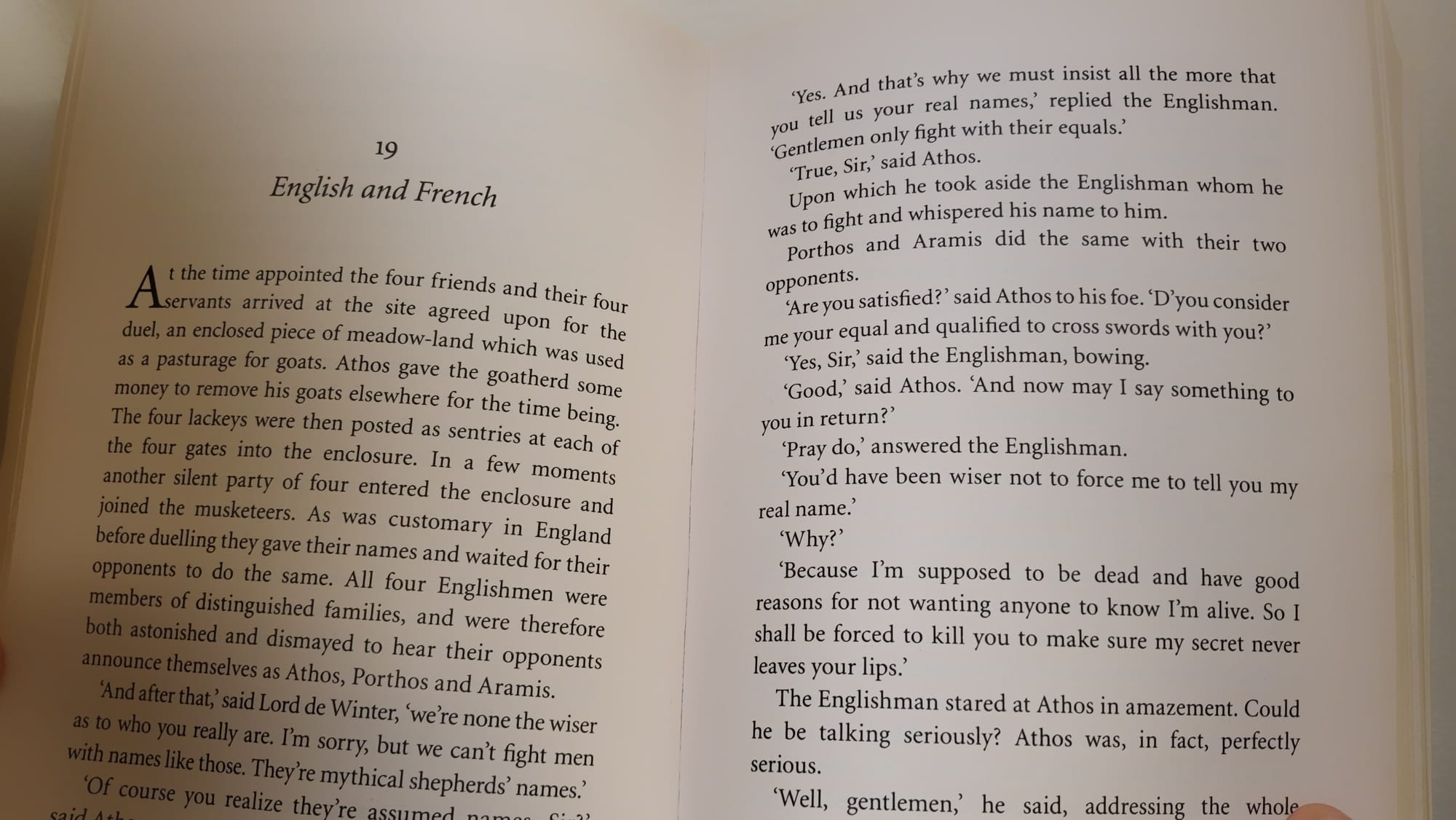
Beyond questions of power, what stood out equally was the friendship and loyalty that bound d’Artagnan to Athos, Porthos, and Aramis. Ironically, their relationship began in duels, when a series of misunderstandings led d’Artagnan to challenge each Musketeer in turn. Yet, the Cardinal’s Guard interfered, and d’Artagnan fought with the Three Inseparables up against a common enemy, namely the Cardinal and his agents. I learned of the effectiveness of this strategy during video games, where I would always team up with other players to take out stronger enemies.
From that moment, their bond grew into something stronger than any courtly alliance. Time and again, the Musketeers risked their lives not out of duty to the crown but out of devotion to one another. The motto which would remain synonymous with the Three Musketeers, “All for one, and one for all,” was proof of trust and solidarity and its overriding power over betrayal, danger, and the shifting tides of politics.
As the novel progressed, a shadow quickly grew over the book, one that would rival trust outright. Deception and intrigue wound its way through every courtly hall, where whispered secrets could prove deadlier than drawn swords. The Cardinal spun webs of deception, pitting allies against each other and sowing distrust where loyalty once stood firm. Even those closest to the Musketeers were not free from duplicity - masks of charm often concealed daggers of treachery. This constant play between truth and deceit heightened the danger of their world. Even today, trust is both the rarest treasure and the most fragile weapon.
The Three Musketeers was more than a tale of swords flashing in the sunlight and friendship, but a mirror held up to the precarious forces that govern both politics and people. It revealed how power can be hollow without wisdom, how loyalty can flourish even in the darkest corners of intrigue, and how betrayal forever lurks behind the velvet curtains of trust. What struck me most was that Dumas did not just tell a story of heroes - he asked his readers to question what truly binds us together when crowns, titles, and promises fall away.
Perhaps that is why, long after the final page is turned, the echo of the synonymous motto still lingers: as a challenge to how we live.
Member discussion