Are you living inside the system?
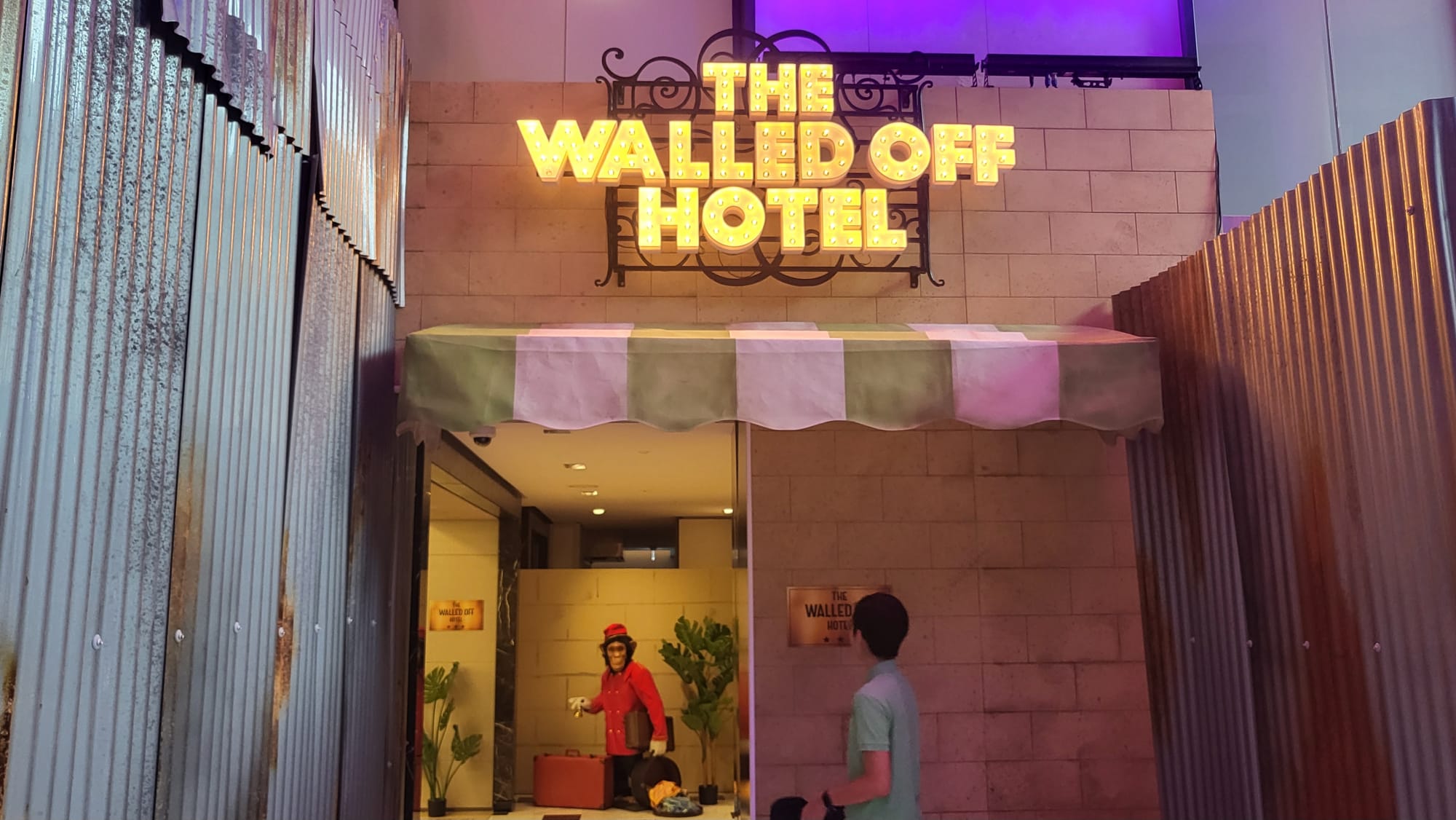
The Banksy: Limitless exhibition, Sydney, 2026
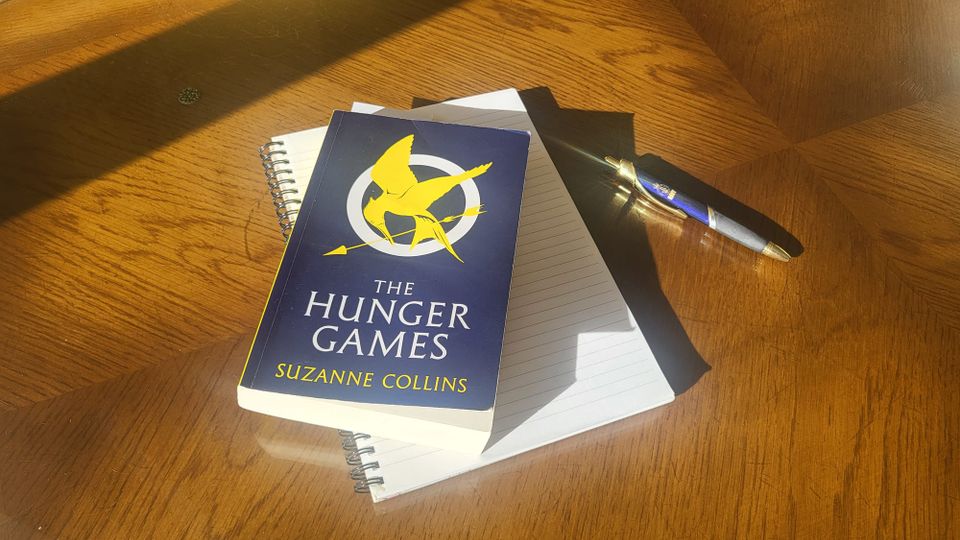
The warm waves of the afternoon sun brushed against my skin as I visited the Banksy exhibition. I left with a smile — entertained, but not sure why it stayed with me. When I got home, I picked up where I had left off that morning: Suzanne Collins’ The Hunger Games.
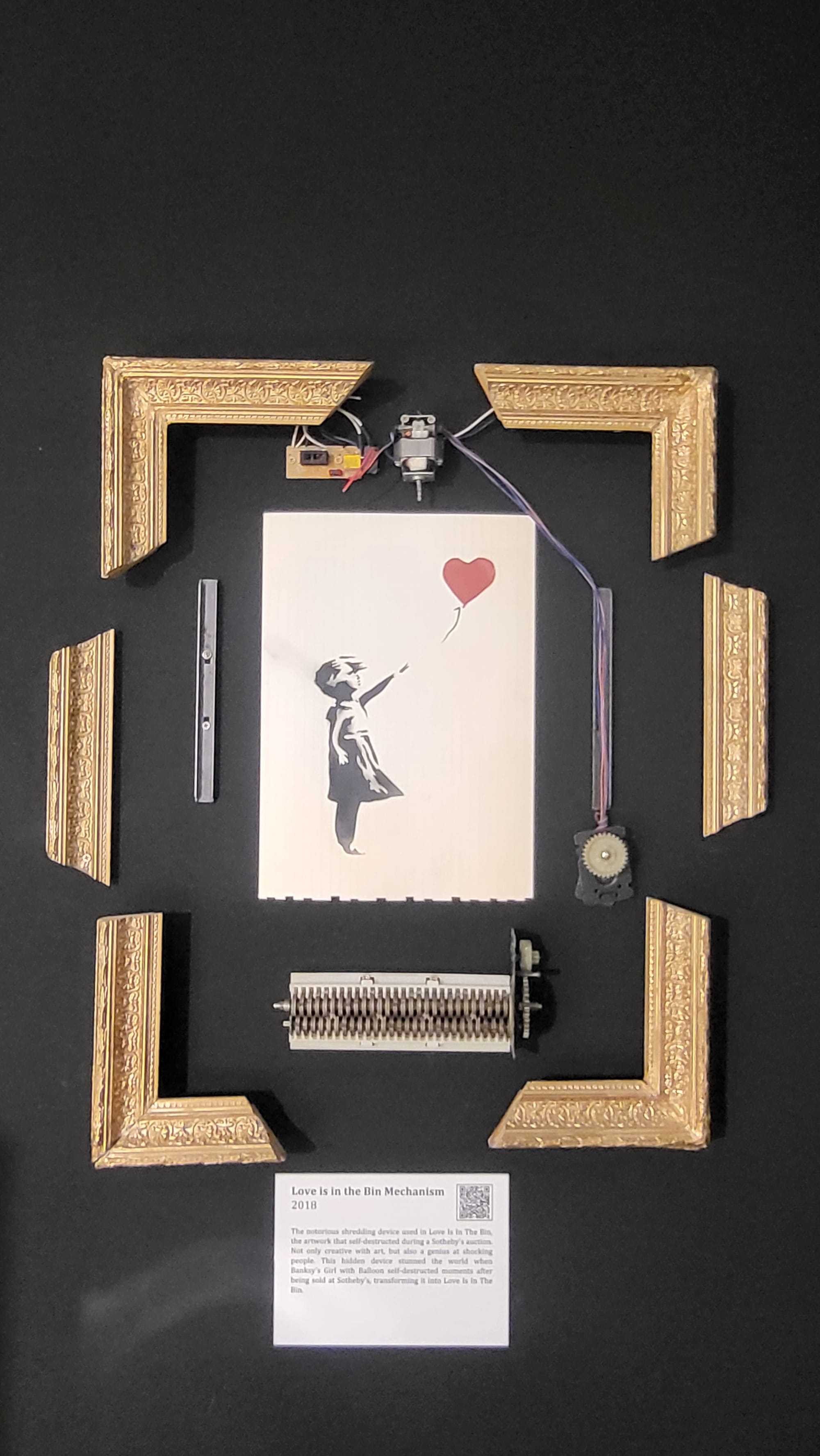
While reading, the exhibition vaguely came back to me. Something that meant more than I had realised when I was standing in front of it.
That was when I began to think about what both were really about: not just stories or paintings, but a reflection of how people become trapped within systems they rarely stop to question.
The Hunger Games is set in former North America. 'Panem' is home to thirteen districts trapped under the totalitarian Capitol. When their oppression reaches breaking point, they rebel against the Capitol. As a punishment, each district must send one boy and girl to fight to the death in the annual Hunger Games. This brutal framework reveals something deeper: how easily people accept and live within structures.
The trilogy follows Katniss Everdeen, a girl from District 12, which specialises in coal-mining. Through her eyes, we see submission to control, voluntarily and involuntarily. When her younger sister, Prim, is selected for the Games, Katniss volunteers to take her place. The male tribute is then chosen: Peeta Mellark, a boy who shares a past with Katniss. Thus begins the 74th Hunger Games — a setup where survival depends not only on strength, but on how deeply individuals are bound by unseen rules and expectations. The Hunger Games goes beyond survival: it is about how people become trapped within webs of authority.
This is where the system becomes invisible, yet most powerful.
In The Hunger Games, a key recurring theme is debt, which acts as another form of control. After Katniss's father dies in a mining accident and her mother withdraws in grief, Katniss struggles to find food for her family. When she is on the brink of starvation, Peeta deliberately burns bread and gives it to her. No matter what Katniss does, she feels she can never fully repay him. This shows how obligation can bind individuals, shaping their decisions even in life-or-death situations. What begins as a personal sense of obligation becomes, in the Capitol's hands, a powerful tool of control.
In a political sense, this applies to the Capitol's propaganda control over its districts. According to the government, since they were so 'generous' to the districts by allowing them to live, they owe the Capitol a great deal. This creates a law of "unpayable debt," where loyalty is enforced through labour and participation in the Games. In this way, the Capitol does not rely on force alone, but on a system where people feel they owe obedience, trapping them within its authority.
This sense of debt makes people accept internalised control without questioning it. During the Games, tributes from wealthier districts such as 1, 2, and 4 typically form an alliance known as the Careers. Unlike others, they see the Games as an honour, blindly accepting the Capitol's propaganda. This is especially true of District 2, the main supplier of Peacekeepers, which remained loyal even during the majority of the Second Rebellion. While other districts recognise their oppression, many in District 2 do not see themselves as controlled at all; accepting and upholding the very system that confines them.
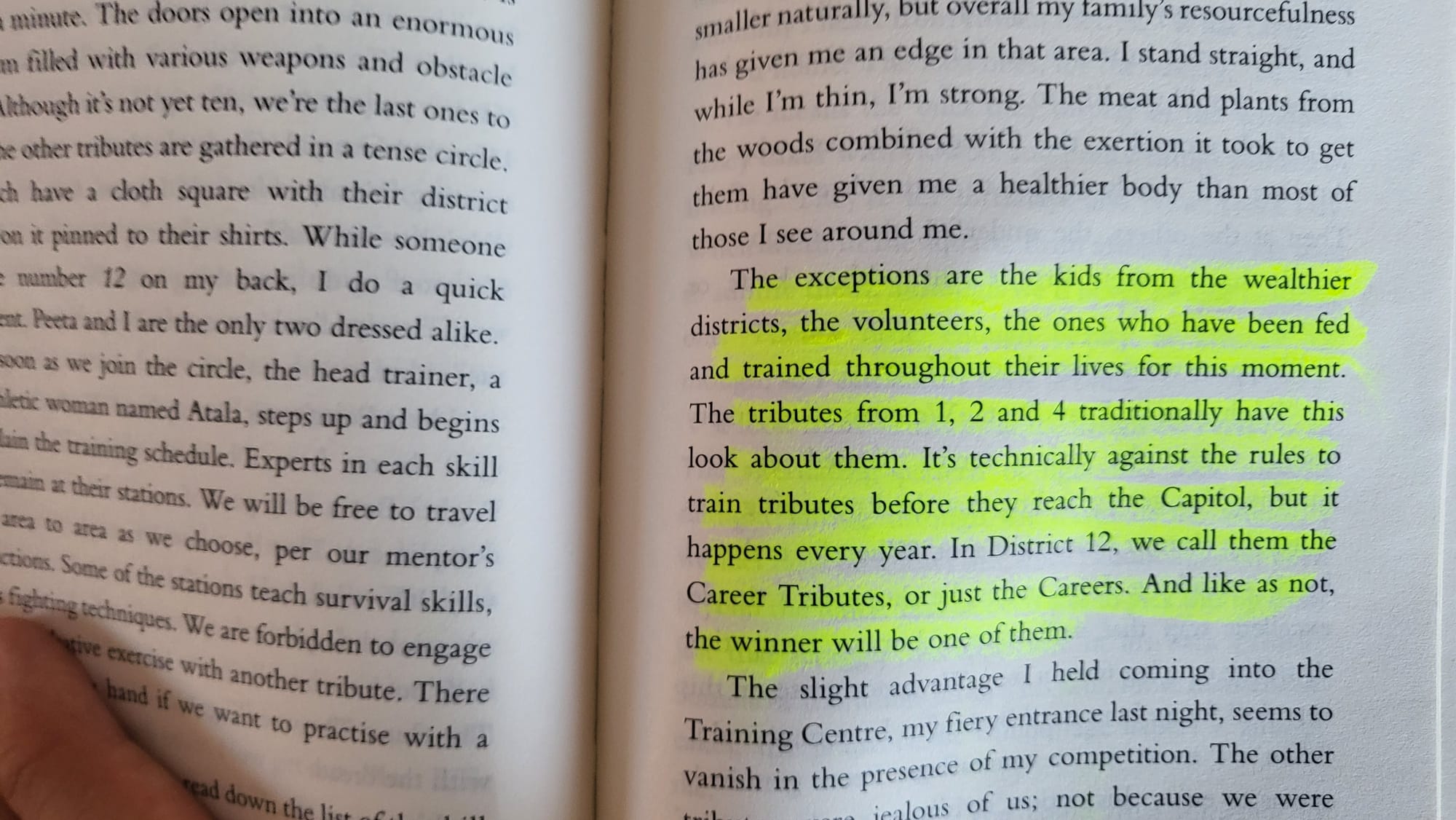
Reading those sections, I had to pause. The same feeling I had walking out of the Banksy exhibition.
What stuck with me was one of Banksy’s video works. The streets of London were packed with signs telling people what to do. Banksy asked: why do people stop so easily when they are told they cannot do something they actually can? And he tested it himself, deliberately doing what the signs forbade.
I understood what Banksy was really pointing at. A system does not merely control people through force. It teaches people what matters to the point where they simply don’t question it.
The people following the signs did not feel directed. The Careers did not feel controlled. That is the point.
The Hunger Games reveals what we rarely think to examine in our own lives. It holds up a mirror to modern society — to how many of us accept the world as it is, without asking who shaped it or why. The real cage is not made of walls. It is built inside the mind, quietly, over time, until it no longer feels like a cage at all.
In a way, we are already living in an invisible arena.

Member discussion