Review: Band of Brothers
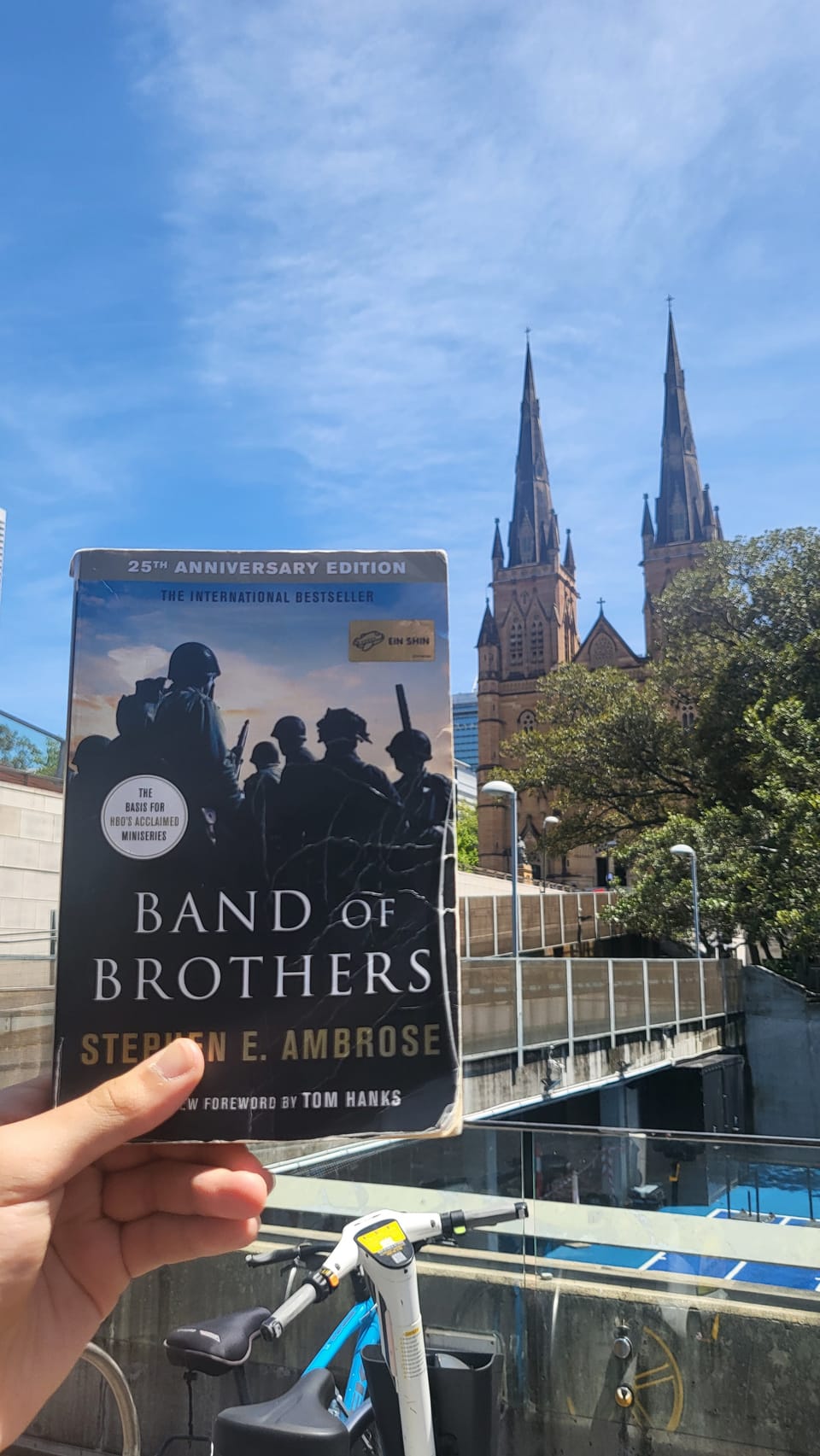
My fascination with military history grew long ago when I was young. I was mystified by its tales of valour and the brilliant minds behind its famous tactics. Every once in a while, I would pick out a pile of books from the library on world wars. Sometimes, I couldn’t even read them, but I tried anyway. When I was just starting out in writing, I had an English tutor (later-turned US Army helicopter pilot) who shared my interest in military history as well, and recommended some books for me to read.
Among those was Stephen E. Ambrose’s Band of Brothers: a book truly unlike any other. Following the men of Easy Company (101st Airborne), the story changed the image of various leadership types for me.
When I hear the word ‘officer’, my mind flicks to the mental image of General MacArthur, sporting his signature pipe and tilted officer’s cap. While this image is compelling, the reality for Easy Company's leadership was different. Throughout its tour of duty, six commanding officers shaped the unit. Stark contrasts were evident, starting with the accidental success of Captain Sobel.
When Easy Company was first trained, its volunteer soldiers began their new lives with the tyrannical discipline of Captain Sobel. In Band of Brothers, an Axis prisoner of war (POW) recalls: “Your bombs were very persuasive. But the sergeant behind me with a pistol to my back was more so.” This was more or less similar to Sobel’s logic. He had the power to dismiss soldiers’ privileges, and would often walk around camp, denying weekend passes for the smallest infractions. Inadvertently, he ended up teaching the men how to perform with fear and hatred. This allowed his men to bond against a common adversary.
This necessary foundation - the crucible of intense preparation - was then perfected under Major Winters, who modelled principled competence. He led from the front, valued the welfare of his soldiers, and consistently made decisive, effective choices. His moral courage and humility created a deep well of trust, proving that true command requires not just the power to enforce rules, but the character to earn respect. The company's ultimate triumph was therefore a composite success, demonstrating that while high standards and tough training are essential to create capability, enduring excellence is only sustained by character. This ensured the unit could survive and fight under varied, often flawed, commanders, even under the effects of the war.
With Easy’s combat operations, it was impossible not to notice the effects of war. When Easy Company first deployed for combat, it had gone in with 140 men. When it had been withdrawn from combat in 1945, the 140 original members of Easy had been reduced to 91. Everyday, scarcely trained replacements and recruits replaced those who had been wounded or killed. Sergeant Carwood Lipton noted that some recruits would freeze up at the sight of blood. The constant proximity to sudden death and the rapid, casual loss of comrades led to a deep emotional numbing, where empathy often became a liability and survival was the sole objective. Everyone in Easy Company had a wound one way or another.
Easy Company had experienced multiple breaking points: from the mutiny against Sobel to the near breakdown of Easy in Carentan. The brotherhood forged in Easy Company transcended mere camaraderie; it was an unbreakable, life-saving covenant born in the hellfire of Normandy, Bastogne, and the ensuing march toward victory.
Bound not by blood but by shared, unimaginable adversity, these men became each other's keepers. They faced overwhelming odds with a unity that defined their legacy. Their bond was the essential shield and sword, turning a collection of citizen-soldiers into an elite, resilient fighting force where no one was left behind. The profound lesson we take from Easy Company's story is that true strength is not found in individual prowess, but in unwavering loyalty and commitment to the people beside you. This itself is reflected in the title, Band of Brothers.
After the liquidation of Easy Company, more than 100 out of the original 139 men were eager to continue the lives their war had intruded on. Maj. Winters delivered leadership speeches as an executive at Pheoll Company, Sgt. Lipton became a local hero as the owner of a supermarket chain, and Lt. Compton practiced justice as a judge in LA. Most lived long, successful lives as lawyers, teachers, and CEOs.
Forty-seven years later, Easy Company was still a ‘band’. Brotherhood had embraced them for life, transcending even PTSD. Yet, this was only possible due to the bonds and sense of responsibility forged in war. Members of Easy put this forward into their post-war lives. All these experiences were brought to the world through Stephen Ambrose’s book.
In one of his regular newsletters, Staff Sergeant Mike Ranney reminisced about a moment that captured the meaning of it all. Asked by his grandson - someone born into a world untouched by war - “Grandpa, were you a hero in the war?”
Ranney paused before answering.
“No,” he said, “but I served in a company of heroes.”





Member discussion