Review: Roald Dahl's Matilda
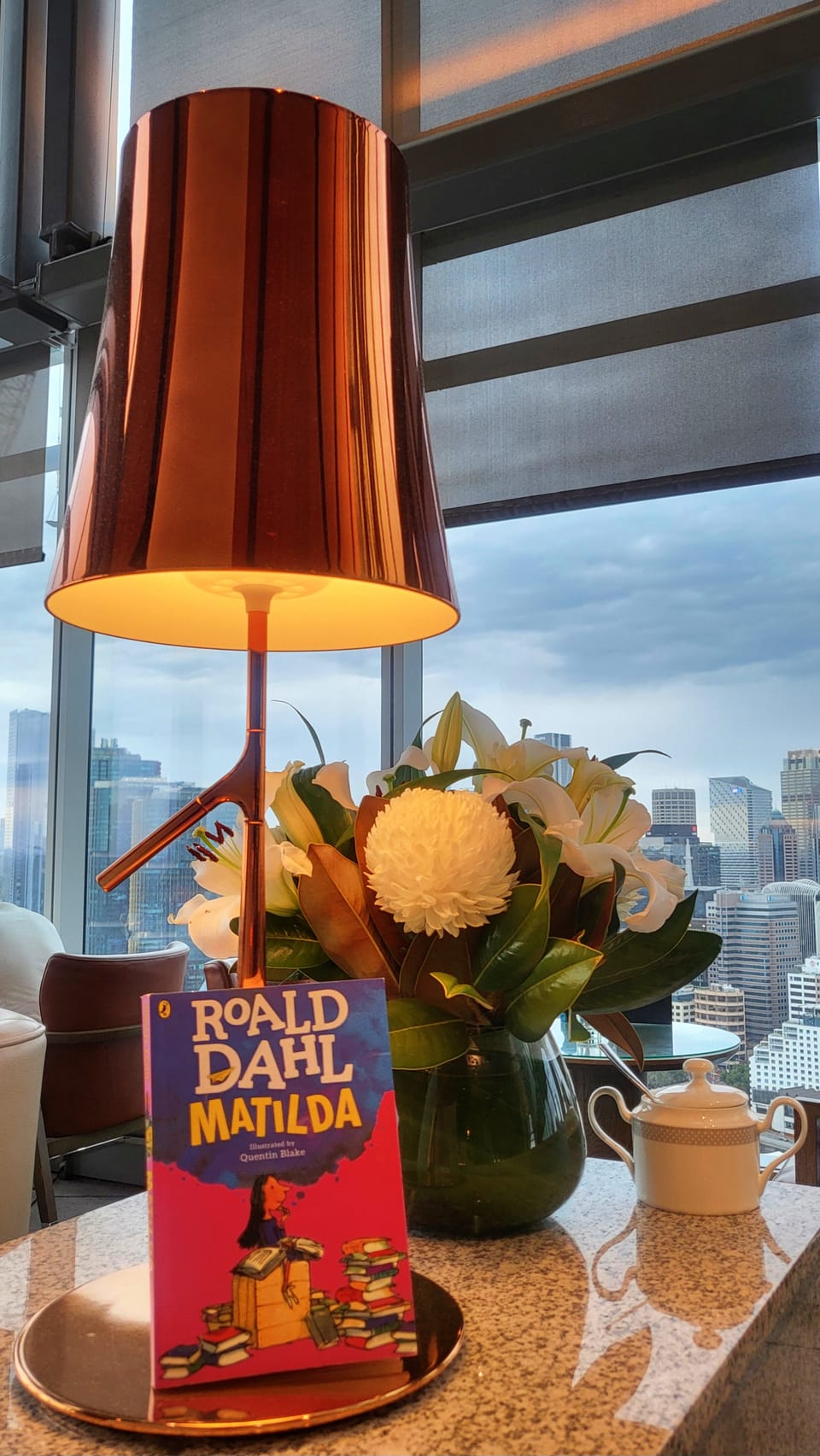
Roald Dahl knew that grown-ups could be ridiculous long before children realised it themselves. His Matilda offers a lens through which to consider this absurdity. He mocks, through imaginary school reports, how parents often exaggerate their children’s potential. Simultaneously, he reminds us of the dismissal of children’s worth.
Matilda tells the story of an extraordinary girl living with an ordinary family. Matilda Wormwood’s father, a successful, yet cheating second-hand car dealer, and mother, a bingo-enthusiast, saw Matilda as nothing more than an annoying scab. At the age of one and a half Matilda Wormwood was fluent in the average adult’s vocabulary, to which the parents replied “Little girls should be seen and not heard!”. From three she began to waddle to the library to read books, reading the works of Hemingway and Dickens under the transfixed eye of the librarian.
That said, the first day of school was a mixed bag for Matilda. As she meets Miss Honey, as sweet as her name suggests, Matilda is warned of the headmistress’ presence by other, wide-eyed children. “We saw Miss Trunchbull grab a girl by the pigtails and throw her over the playground fence! She’s mad!”
Their words faltered the instant they came out of their mouths. Silence fell throughout the whole courtyard, as a formidable figure strode across in a belted smock and green breeches: Miss Trunchbull.
When I first read Matilda as a child, I took it as a simple, ideal tale of resistance to injustice. A few years later, rereading it with a more mature eye, I noticed how absurd some situations were - such as how Matilda discovers her power of telekinesis - and how far they stretched reality.
While Miss Trunchbull displayed the tyranny and unfairness of Dahl’s contemporary teachers, she went a step further. She threw two children out of the window and over the fence, forced a small boy to consume a mound of chocolate cake, stuffed children into a torture device disturbingly similar to an iron maiden, and yanked all of a boy’s hair with one fist. In the later stages of the novel, it is revealed how Miss Honey was left to the Trunchbull’s care, thus abused. However, the reality of such events left me conflicted. Roald Dahl himself notes the rarity of such people - if any - in this world inside Matilda. This contradiction made Miss Trunchbull the embodiment of every child’s fear: the adult who abuses power, mocks vulnerability, and makes justice feel impossible. After all, Dahl inflates her cruelty not to mirror reality, but to expose the grotesque hunger for punishment we share with the children who cheer her downfall.
Towards the end of the novel, it is revealed that Matilda’s father had been caught by the police for unlawfully altering cars. Yet, as Matilda’s family prepared to leave, Matilda refused to part with Miss Honey and her school. Her parents, as lacklustre they were, welcomed this offer, as Matilda embraced Miss Honey as her adoptive mother.
In itself, this is absurd: to accept a teacher one has only just met as an adoptive mother. Underneath its silliness, Miss Honey is Dahl’s response to Matilda’s parents and their ignorance. Through Miss Honey’s warmth, Matilda finds a place where her intelligence and imagination are valued, and nurtured. What seems absurd on the surface becomes an act of resolution.
Roald Dahl’s Matilda is more than a tale of revenge. The absurdity is simple, from the acceptance of a teacher as an adoptive mother, and the sheer strength and evilness of Miss Trunchbull.
Throughout the novel, Dahl realises the very thing most overlook. Matilda defeats cruelty with cruelty. When her father repeatedly scolded Matilda for her obsession with books, the very next morning, she coated superglue over her father’s favourite hat. Once it stuck on his head, the hat dug deep into his scalp. Ultimately, Mrs Wormwood cut through the hat painfully with a pair of scissors. This reminds us, according to Mrs Phelps, the librarian from the musical adaptation, how two wrongs don’t make a right. Be that as it may, what lingers is the image of a small girl, book in hand, standing taller than everyone who tried to belittle her.
To change the world, it takes a little genius.




Member discussion