What Makes Art Valuable?
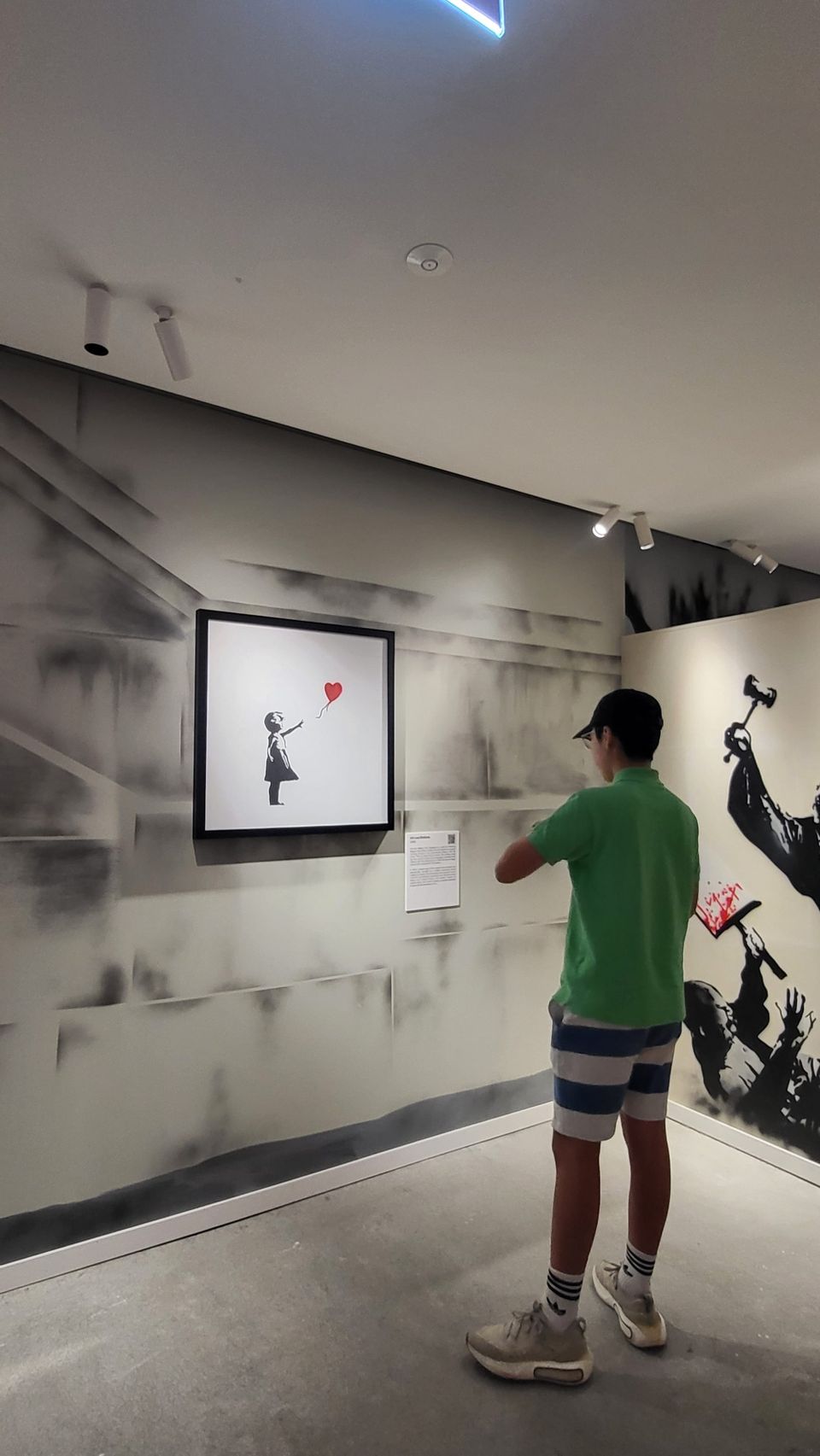
Before visiting the Banksy: Limitless exhibition in Sydney, I had a vague yet somewhat formed idea of who Banksy was. I had briefly looked him up — partly out of curiosity, and partly because a few of my closest friends admired his work. So when I first stood in front of his pieces, my initial reaction was this: graffiti is art?
It was a reflex — shaped by everything I had always assumed art was supposed to look like. But Banksy’s work kept pushing against that assumption, posing a question I had never thought to ask myself: what is art?
Walking through the exhibition, what stayed with me was not any single image, but a single idea — Better Out Than In. In art galleries, they have a system where they define art. In galleries, something with value is art, and art with value is something which naturally belongs to galleries.
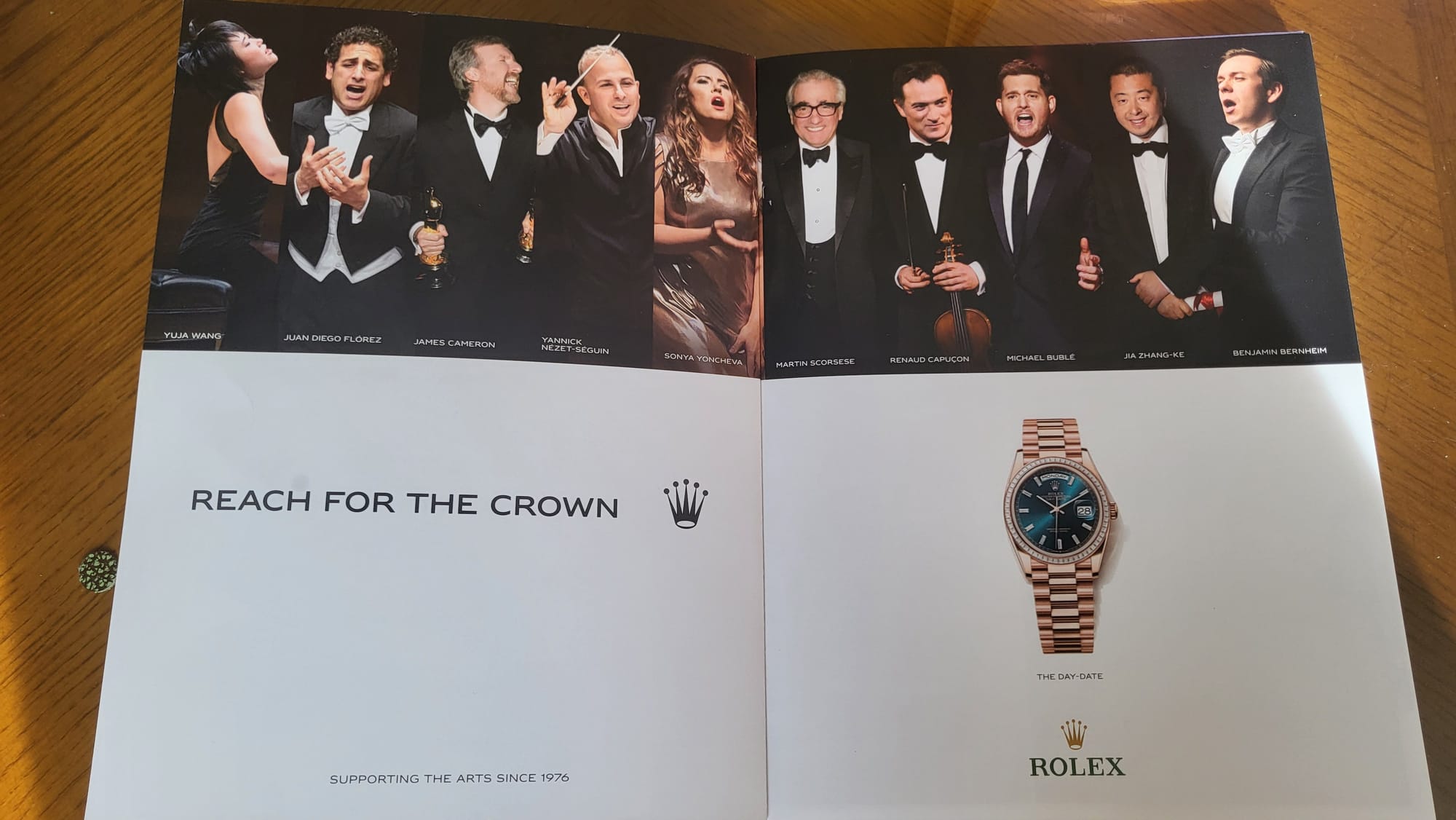
People look for value, reputation, and labelling. Most people don’t buy Rolex watches to look at the time: it’s there because it has a reputation of being expensive, valuable on the market, and marketed by opera singers. This is the logic Krasznahorkai describes. People have built cultural systems in which people judge things by recognition, not through their own eyes. If people don’t know it, it loses reputation, value, and labels, hence no-one buys it.
This is not a modern anxiety. This reminds me of Krasznahorkai's Seiobo There Below, where he describes a Renaissance cassone panel's worth shifts entirely depending on its attributed authorship – Botticelli, or merely his follower Filippino Lippi. Banksy understood this. His response was not to argue about names, but to remove the system entirely.
Banksy brings his artworks (an entire exhibition called Better Out Than In) outside to the city, removing art from the system. This forces people to judge its value on their own, often failing to recognise its values at all.
Part of Better Out Than In is the Banksy Street Art Sale. A stall set up by Banksy in NYC, it sold authentic Banksy pieces for 60 dollars apiece. The sign on the stall simply reads: “Street Art”. By placing original works in an ordinary street setting, stripped of branding, price, and narrative, Banksy removed the very structures that usually signal value.
If the stall had read, “Authentic Banksy Pieces” or “Banksy’s Signed Art” it would have sold more works. People simply passed by without noticing. When art is taken ‘out’ of the systems that define it, its value does not simply remain; it risks disappearing entirely. The following day, Banksy released a video revealing that the stall did sell authentic Banksy works, and the works (sold for 60 dollars) peaked in price.
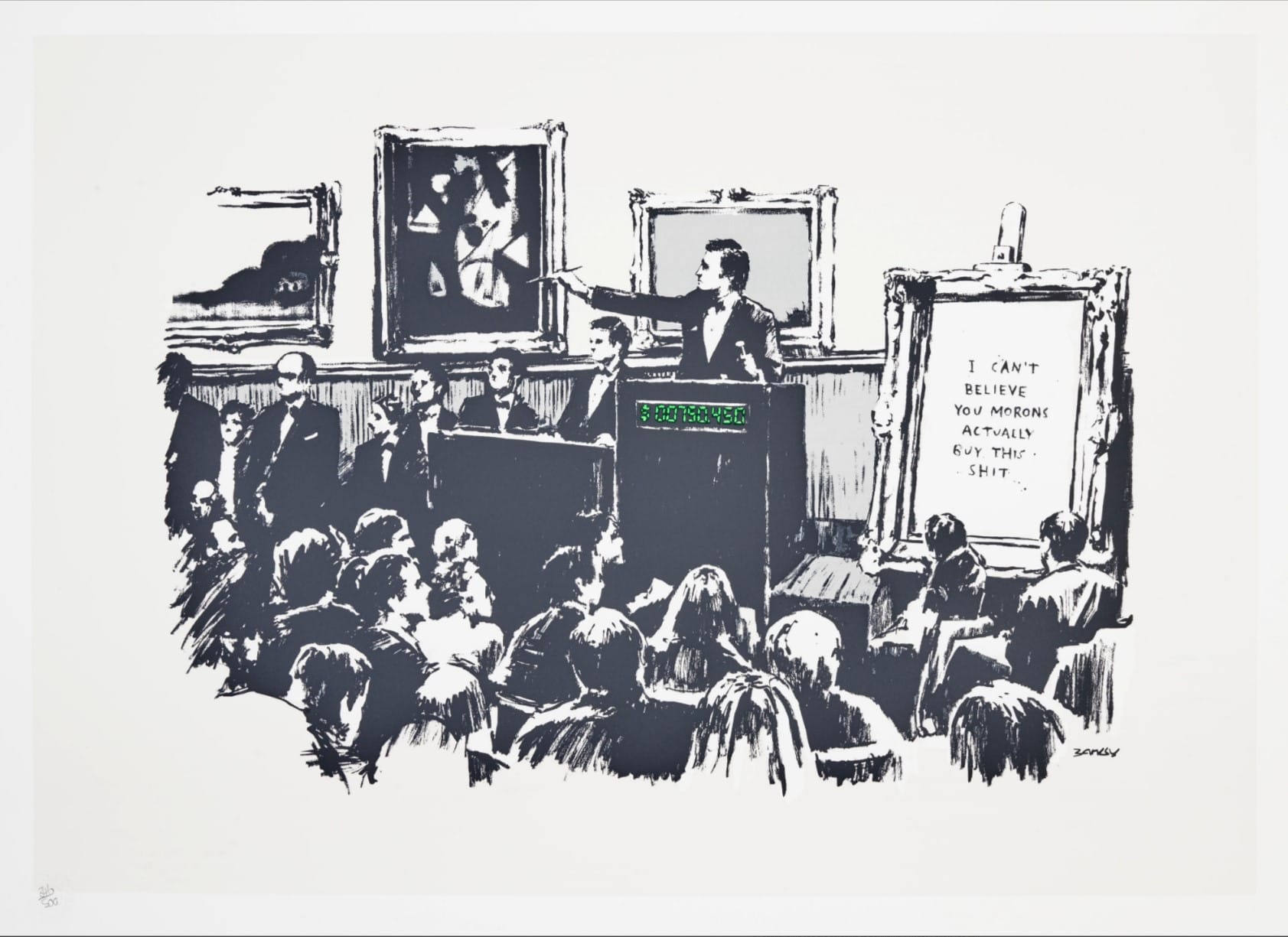
One particular work of Banksy really sunk into me: Morons. The Morons series all follow the same basic structure. An audience and an auctioneer in a room with a white canvas. Inside the white canvas is one sentence: “I can’t believe you morons buy this s***”. At first, I was taken aback.
But that discomfort was the point. Banksy mocks people for buying his artworks, which people believe hold true value. This is a comment on his own buyers, who are ready to hand over stacks of bills just to get ahold of a ‘Banksy original’ without stopping to contemplate its meaning. It reveals that the value of art is not inherent, but constructed by systems of prestige and belief – systems people follow blindly, even when they are being openly mocked by them. In other words, without the system, Morons is just a series of meaningless paintings.
Banksy exposes the fragility of artistic value, but the fragility of our own perception. His work reveals how easily we outsource our judgment to systems that tell us what to admire, what to buy, and what to believe is “worth” something. By stripping art of its labels, its price tags, and its institutional framing, he forces us to confront an uncomfortable truth: without the scaffolding of reputation, most of us no longer trust our own eyes.
I walked into that exhibition asking whether graffiti could be art. I walked out asking whether I had ever really seen anything at all.

Member discussion