What Makes a Good School?
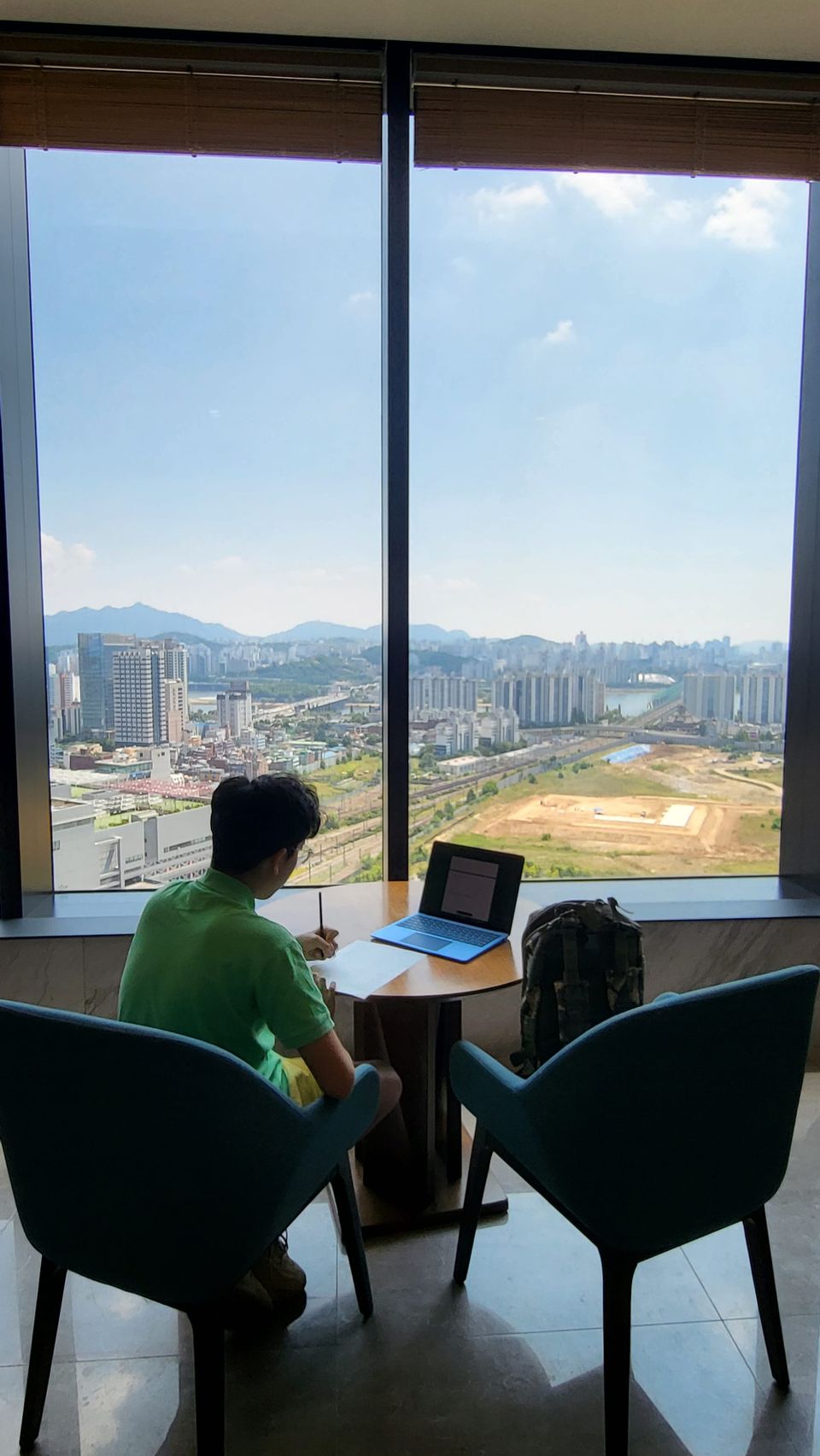
I used to judge schools by what I could see — especially private and selective ones. Celebrity alumni. Well-lit theatres. Fully-waxed basketball courts. The kind of things that make a school look impressive from the outside.
But the longer I've been in school, the more I've come to wonder: what is a good school? This is not to say that private and selective schools cannot have great teachers — many do. But what does it mean to truly learn something inside one?
In schools, some teachers teach one way, but personally, for me, good schools have teachers who teach many. I attend a local public high school, where I think there are many of those teachers. They all share one quality that is hard to name — something closer to genuine care than the curriculum.
The teacher who showed me this first was Mr T. Before him, I had known very little about science, as it is very hard for me to learn something new (when my brothers are immersed in science videos, I completely ignore them).
Mr T changed that. What made him popular among us students was that he never believed in textbook work. What was the point of getting students to read words which they will never fully understand without applying that knowledge at school?
He got us to do experiments in the lab instead, where we applied the knowledge we used to conduct practicals. After the experiments were over, Mr T would ask everyone for their opinions. Everyone would get a chance to share their thoughts, and Mr T would be able to give everyone feedback on them. He taught us all how to be curious, something even the best teachers find hard to do.
Mr T wasn’t the only one; Ms L, our music teacher, had the same effect. In the time us students had the fortune to have her, she was one of our most favourite teachers. When I first started music, I had known very little about it, but she made me love it. She understood how hard sheet music and music itself is to follow, so she taught us the instruments and how to play them first, which was outside the curriculum. She encouraged everyone, leaving great comments and encouragement to those who couldn’t play music well (like me). Before her, I had thought that if I was bad at something, it wasn’t meant for me. Ms L told me otherwise.
She reminded me of someone I had read about — Dick Winters, an American officer who led Easy Company through World War II from one of my favourite books, Band of Brothers. What made Winters extraordinary was not his rank, but the way he treated those beneath him. He never demanded respect; he earned it, through genuine care for every soldier under his command. Ms L was the same. She never enforced authority from above — she stepped down to where we were, understood our struggles, and lifted us from there. That is why, in both cases, those beneath them never simply followed orders. They wanted to.
If Mr T taught us to be curious and Ms L taught us to be brave, Mr W, our maths teacher, taught us something else entirely. When Mr W was young, he had been a less-than-average student in all of his subjects. Among his weakest subjects was maths, but as he grew up, he ended up practicing his mathematics. He fully developed his skills when he was in his later college years, and turned his years of inexperience around.
When Mr W’s class was let down since we all failed a test we thought was easy, he told us a story about when he visited a casino with his friends. The only game he played was blackjack (“mathematically”, he said, “Blackjack had the best odds. And also it looked the easiest.”) I couldn't help but think of a book I read by Richard Feynman, a famous physicist. In one chapter, he wrote about how he had thought that the roulette table was easiest, so he bet on it. Both of them lost money almost immediately, walked away and never went back. “So,” Mr W said, “Don’t worry. Probably everyone in their life has had that sort of feeling before!”
Mr W taught me to look back on my errors and learn from them — that how weaknesses can become a strength. Hopefully, I will learn to do the same.
These teachers all taught differently, but they all held the same belief.
A good school is not defined by its building or reputation. It is defined by how it changes the way students think. It is the good teachers who teach in many ways who truly make the students grow: to see the world differently from within.


Member discussion