Book Review: Mark Twain's Tom Sawyer
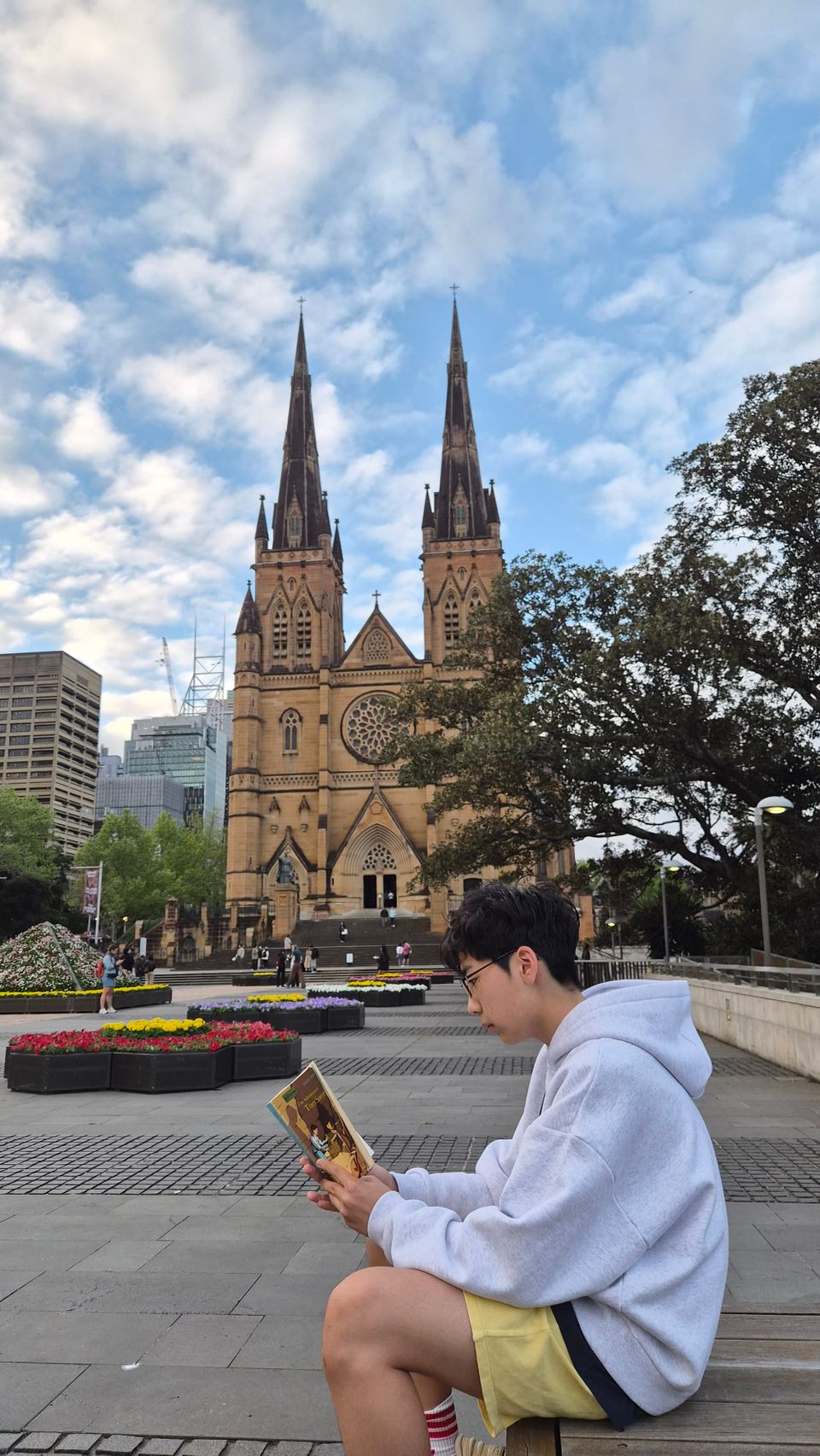
Some time ago, my grandparents came to visit me in Australia, and we went to a bookshop, where they bought me several classic books they had read in their childhood.
Back then, I was a little disappointed.
I thought a good book meant a graphic novel, or at least something with plenty of pictures and not too many words. For a while, the books sat untouched on my shelf, collecting dust. Then one day, out of boredom, I finally took one down and started reading.
That changed everything.
Before long, I was reading classics by choice. I finished The Three Musketeers and Gulliver’s Travels in just under three days.
One book I particularly enjoyed was Mark Twain’s The Adventures of Tom Sawyer. With every chapter, I wanted more and more to become Tom: to explore caves, hunt for treasure, escape to an island and turn an ordinary afternoon into an adventure.
The novel is set in the small fictional town of St Petersburg, Missouri, where Tom spends his days playing Robin Hood, fishing, avoiding school and dreaming of buried treasure. His adventures become more serious when he and his friend Huckleberry Finn sneak into a graveyard at night. They witness Injun Joe murder Dr. Robinson who then framed the innocent Muff Potter for the crime.
Tom’s imaginary adventures begin to collide with the real world. He becomes involved in real danger, searches for treasure and finds the courage to tell the truth in court and save Muff Potter from the gallows.
Tom is mischievous, reckless, and sometimes selfish. He is certainly not presented as a perfect child; in fact, he detests the town’s perfect child. Yet as the novel progresses, his bravery becomes something more than the courage to play pirates or explore forbidden places. When he risks his own safety to defend Muff Potter, his adventurous spirit develops into moral courage.
In this sense, the book seems to grow alongside Tom. Yet he never loses two qualities that define him from the beginning: curiosity and bravery.
Throughout the novel, Tom is surrounded by school, church, family discipline and the expectations of respectable society. He constantly pushes against the ordinary world around him, often without even realising it. When he is ordered to whitewash a fence, he persuades the other boys that the task is a privilege and gets them to trade possessions for a turn. An island can become a pirate kingdom. A ruined house might contain treasure. A cave is not simply a hole in the ground, but a place waiting to be explored.
Of course, Tom’s curiosity often gets him into trouble. Twain does not suggest that children should remain reckless forever. Instead, Tom gradually gains judgement and responsibility without giving up his sense of wonder.
This becomes especially clear near the end of the novel. After Tom and Huck discover their treasure, Twain describes adult men searching haunted houses themselves, calling them “grave, unromantic men.” I found this funny because these are exactly the sort of adults who might normally dismiss treasure hunting as childish. Yet once Tom proves that treasure can actually be found, they begin digging too.
Perhaps their curiosity was never completely gone. Like the treasure itself, it had simply been buried beneath adulthood.
That is what I find most interesting about The Adventures of Tom Sawyer. Twain does not argue that people should refuse to grow up. Tom himself has to grow. He learns that bravery is not only entering caves or confronting danger, but telling the truth when he is frightened.
Twain tells us adulthood may demand seriousness, but it should never silence the persistent voice that asks what might be waiting just beyond the next bend.




Member discussion