Book Review: The Lord of the Rings
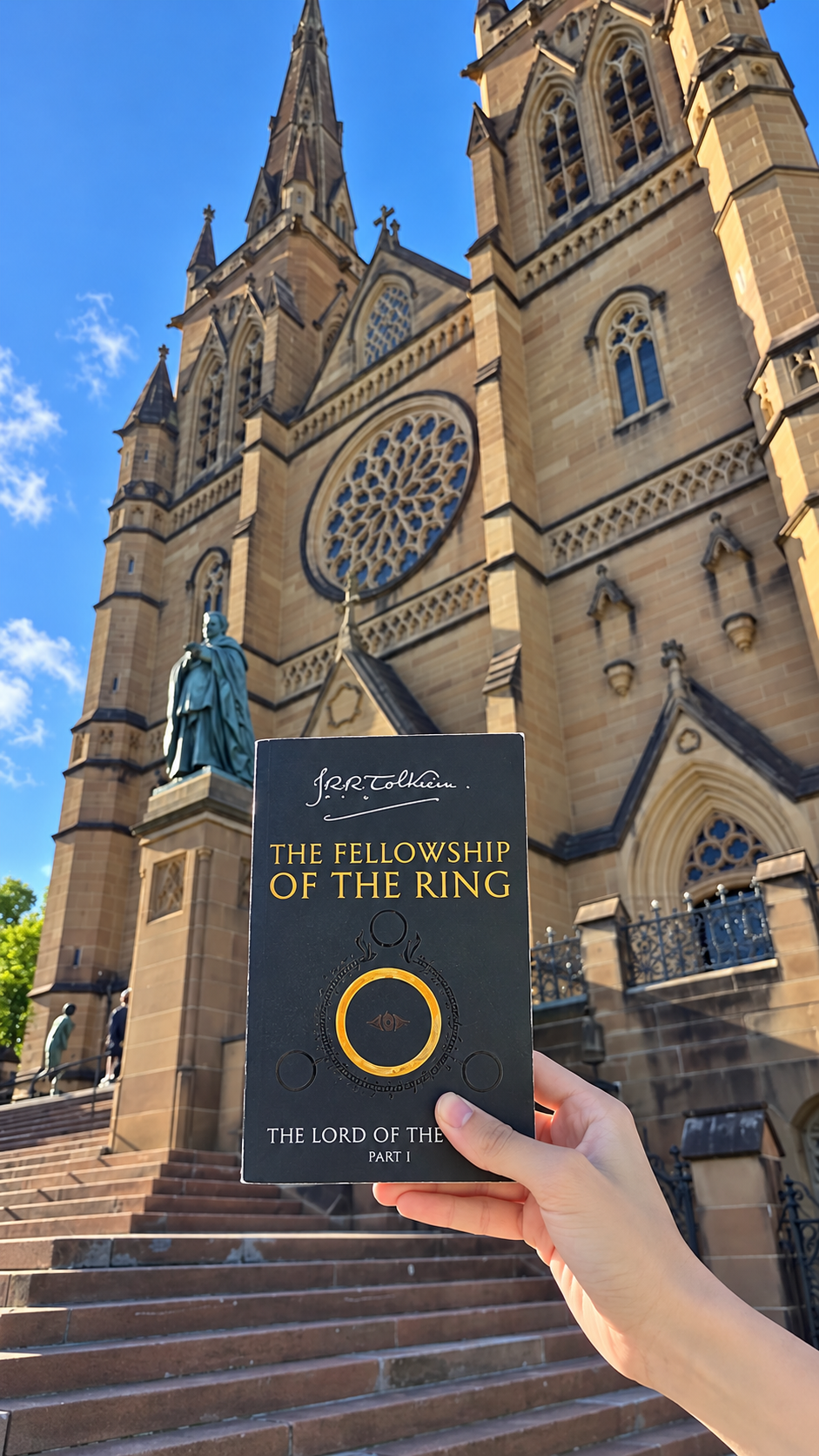
In The Lord of the Rings, J.R.R. Tolkien introduces a variety of races and beings into his world of Middle-earth, among them the famed Wizards. Of these, Saruman the White holds the greatest authority. He is the leader of the Wizards, head of the White Council, and a figure respected for his extraordinary wisdom and knowledge.
This is why Gandalf, himself a powerful wizard, turns to Saruman for help while trying to protect Frodo and deal with the threat of the One Ring. Gandalf approaches him not as an enemy, but as someone whose wisdom and authority he trusts. Yet when Gandalf arrives at Saruman’s fortress, he discovers that Saruman desires the power of the One Ring for himself and has begun pursuing the same kind of domination he was once expected to oppose.
What stood out to me most was the contrast between Saruman’s appearance and what he had become.
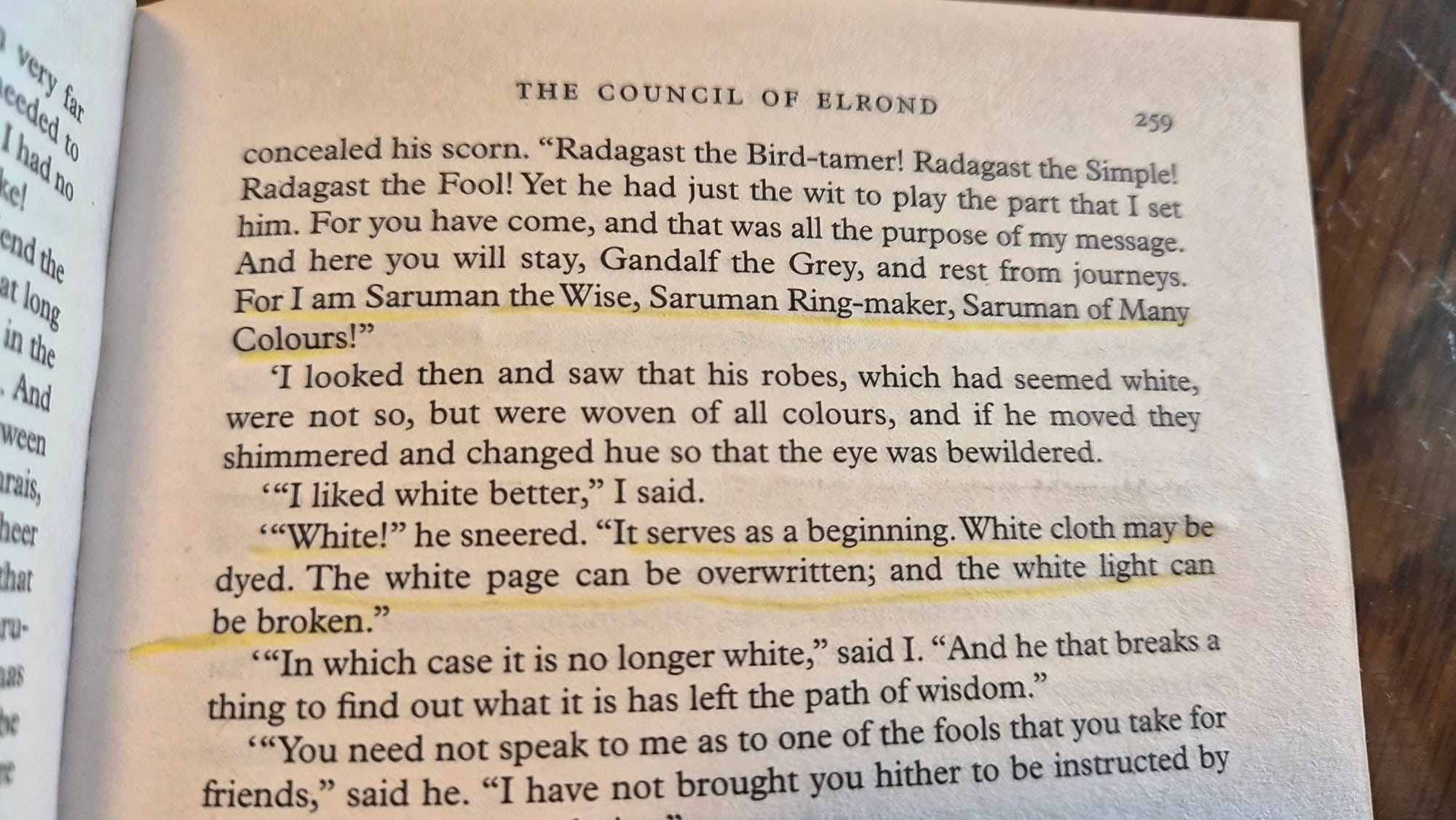
Page 259 shows Saruman's true colours. Once known as Saruman the White, he now calls himself “Saruman of Many Colours.” His changing robes reflect his rejection of the identity and values he once represented.
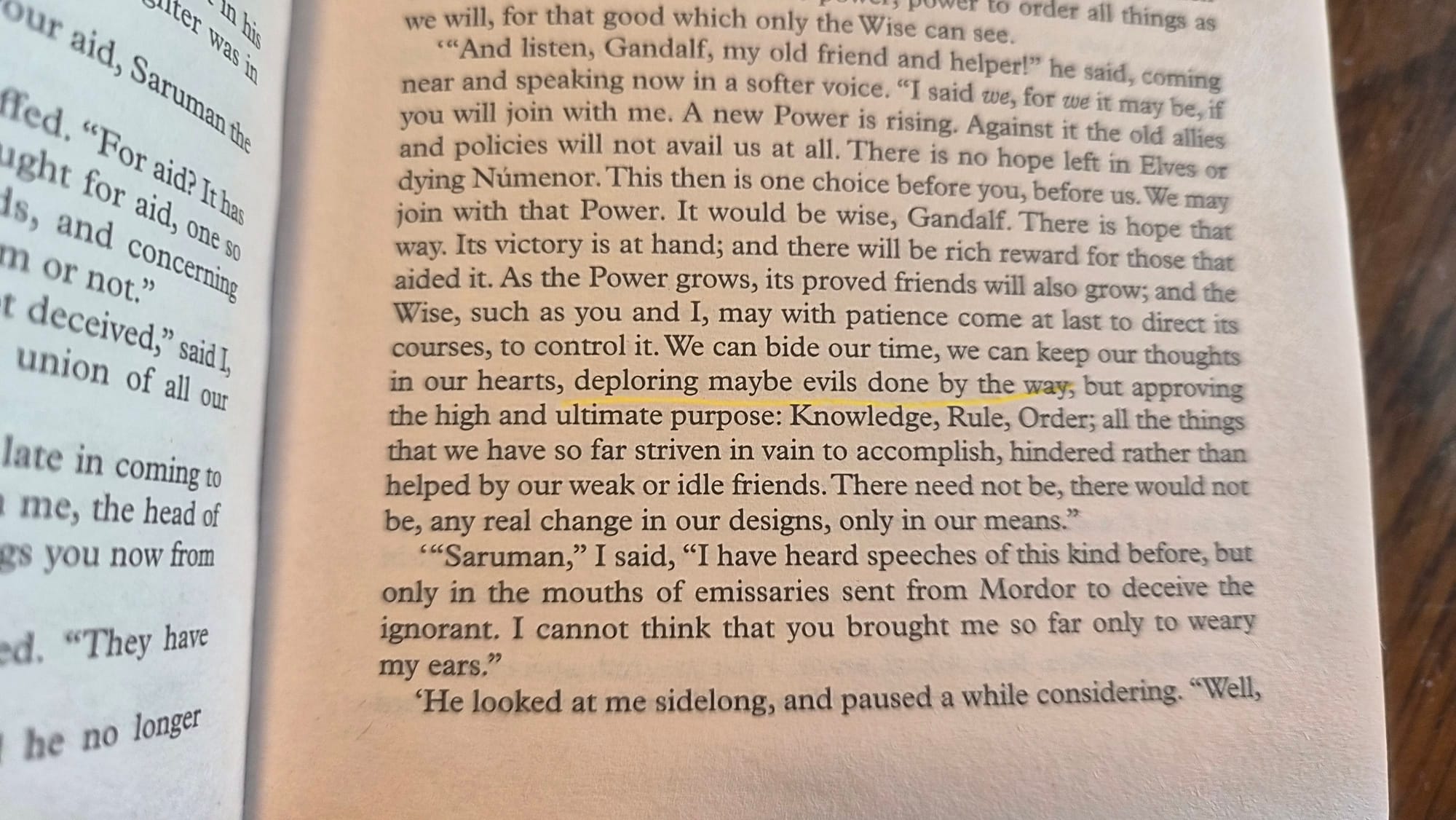
Saruman presents his alliance with evil as a path towards knowledge, order and wisdom. He believes that the pursuit of a greater purpose can justify the harm done along the way.
White initially represents the purity, wisdom and responsibility associated with Saruman’s position. To me, white suggests innocence, peace and moral authority, which makes his betrayal even more striking. Later, when he calls himself “Saruman of Many Colours,” his change in appearance reflects his rejection of the identity and values he once represented. The wizard trusted to guide others against darkness has begun turning towards it himself.
Saruman’s corruption is also reflected in the transformation of Isengard, where nature gives way to pits, furnaces and industry. Tolkien therefore creates a contrast between appearance and reality, suggesting that someone who seems wise and trustworthy may no longer represent the values associated with that image.
Saruman’s transformation can also be connected to real life. Political leaders often gain authority because people trust them to protect their country and act in its interests. However, some leaders begin to place their own ambitions above those responsibilities once they gain power, sometimes drawing others into conflict for their own purposes. Saruman follows this pattern. His desire for greater power gradually becomes more important than the people and cause he was supposed to protect, showing how dangerous trust can be when it is misplaced.
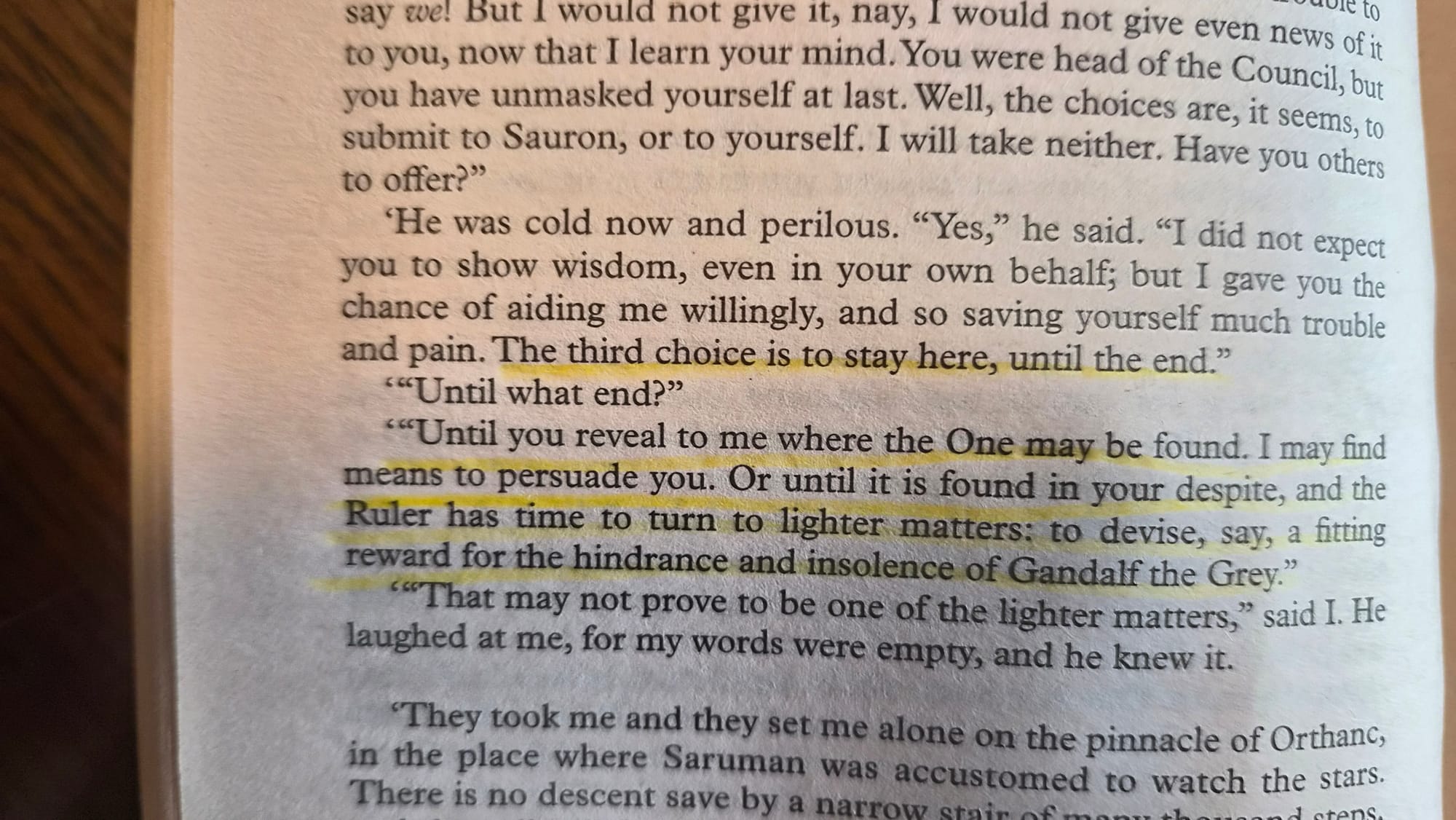
Saruman gives Gandalf one last opportunity to join him, revealing how he uses persuasion and intimidation to turn even those he once considered allies towards his ambitions.
Saruman’s corruption is also shown through the way he manipulates others. He builds an army of Orcs and Uruk-hai to fight for him and help him seize the One Ring. Saruman also recruits the Dunlendings, a people with a long-standing resentment towards the neighbouring kingdom of Rohan. Rather than creating their resentment from nothing, Saruman exploits their existing grievances against Rohan and persuades them to fight for his cause.
This contrast between appearance and reality is also common in Shakespeare’s works. In one of his plays, Othello, Othello is a military general who places his trust in Iago. To Othello, Iago appears honest and loyal. However, Iago secretly resents Othello and uses that trust to manipulate him.
Like Saruman, Iago is dangerous not because he appears threatening from the beginning, but because others believe they can trust him. However, unlike Saruman, who already holds enormous public authority, Iago gains power more privately by manipulating individuals around him. Both writers therefore show how appearances can hide intentions that are very different from what others expect.
Saruman made me realise that trust can itself become a source of power, especially when people stop questioning someone simply because that person has earned their respect in the past.





Member discussion