"How lucky! Did you see the Busan beach?"
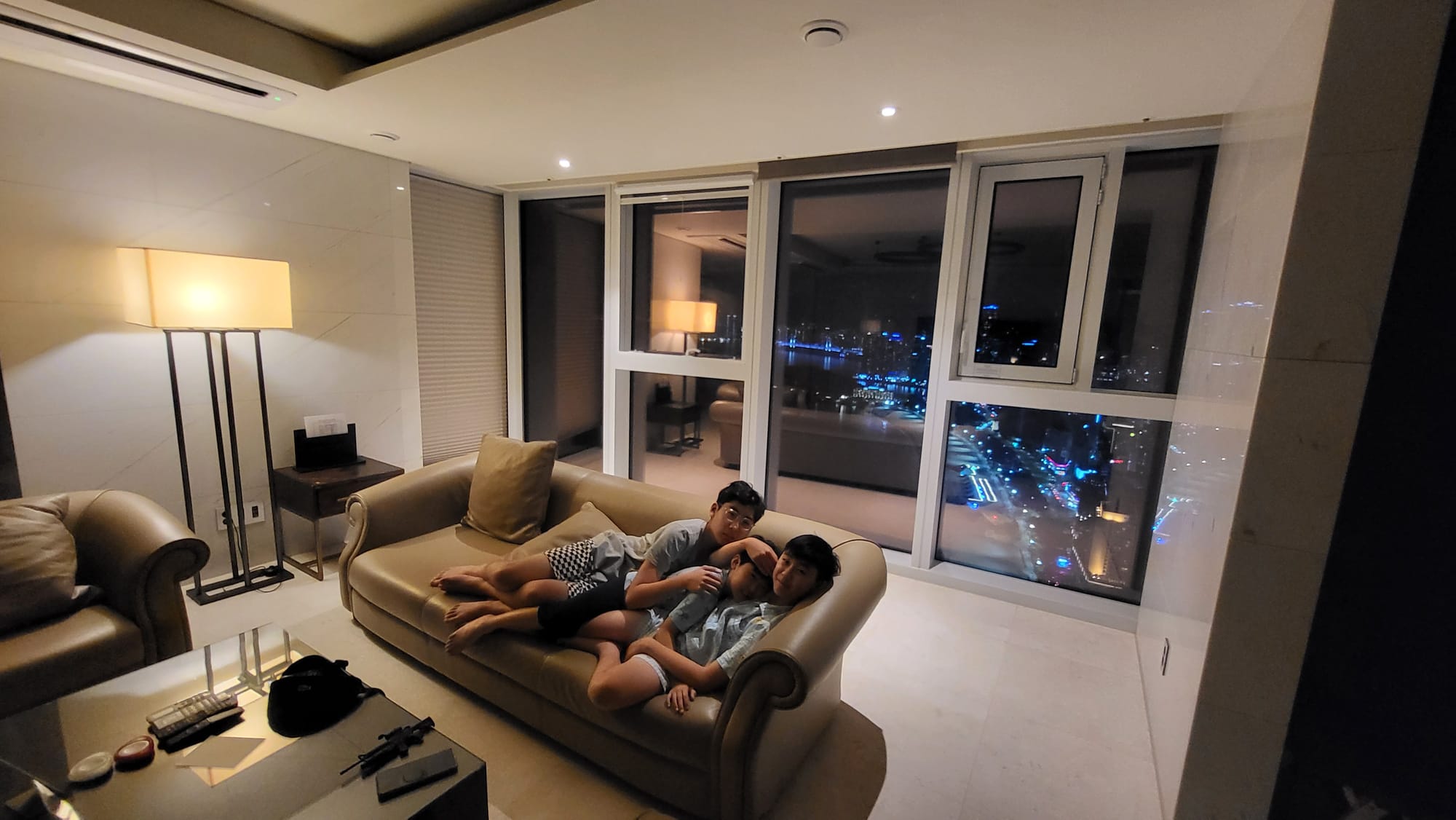
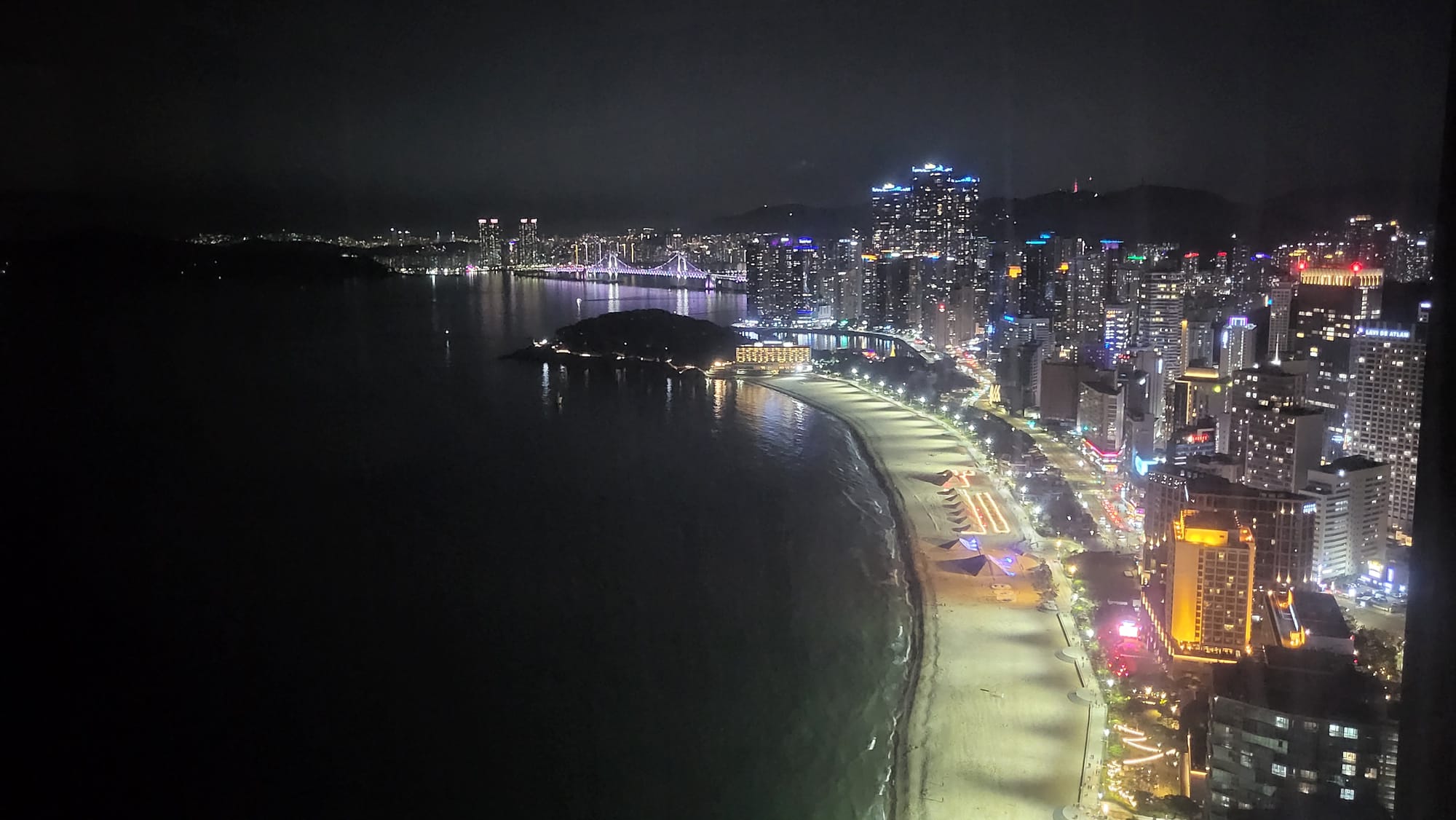
Trip to Busan
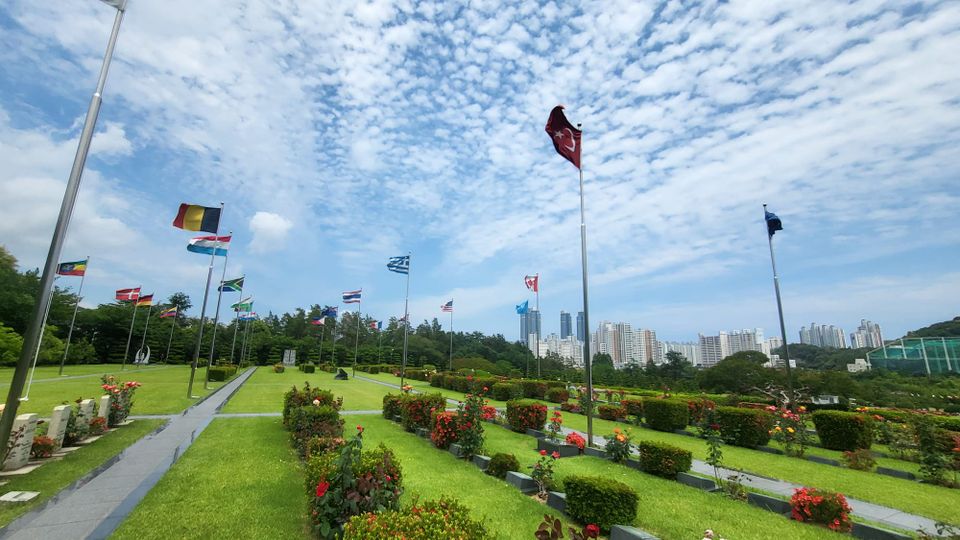
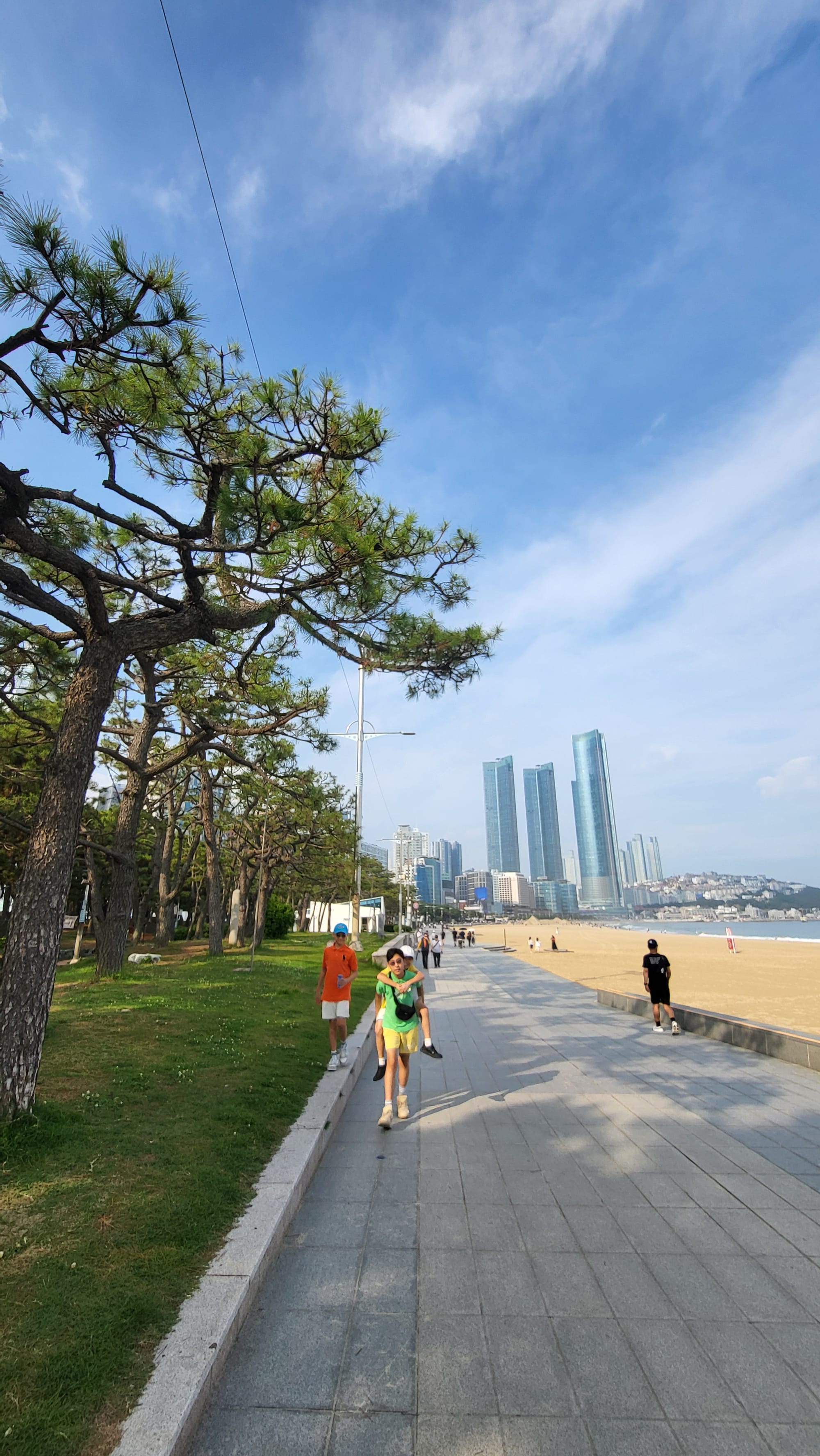
When someone says, "I went to Busan on my holidays," immediately I like to imagine the common reply: "How lucky! Did you go to Shinsegae? Haeundae Beach?" Of course, they're popular tourist destinations. In fact, when I recently visited Busan, while I liked both Shinsegae (the largest department store in the world) and Haeundae, they were not my favourites. Most unforgettable was the United Nations Memorial Cemetery in Korea (UNMCK), the only UN cemetery in the world, wrapped in a peace I hadn't known existed before.
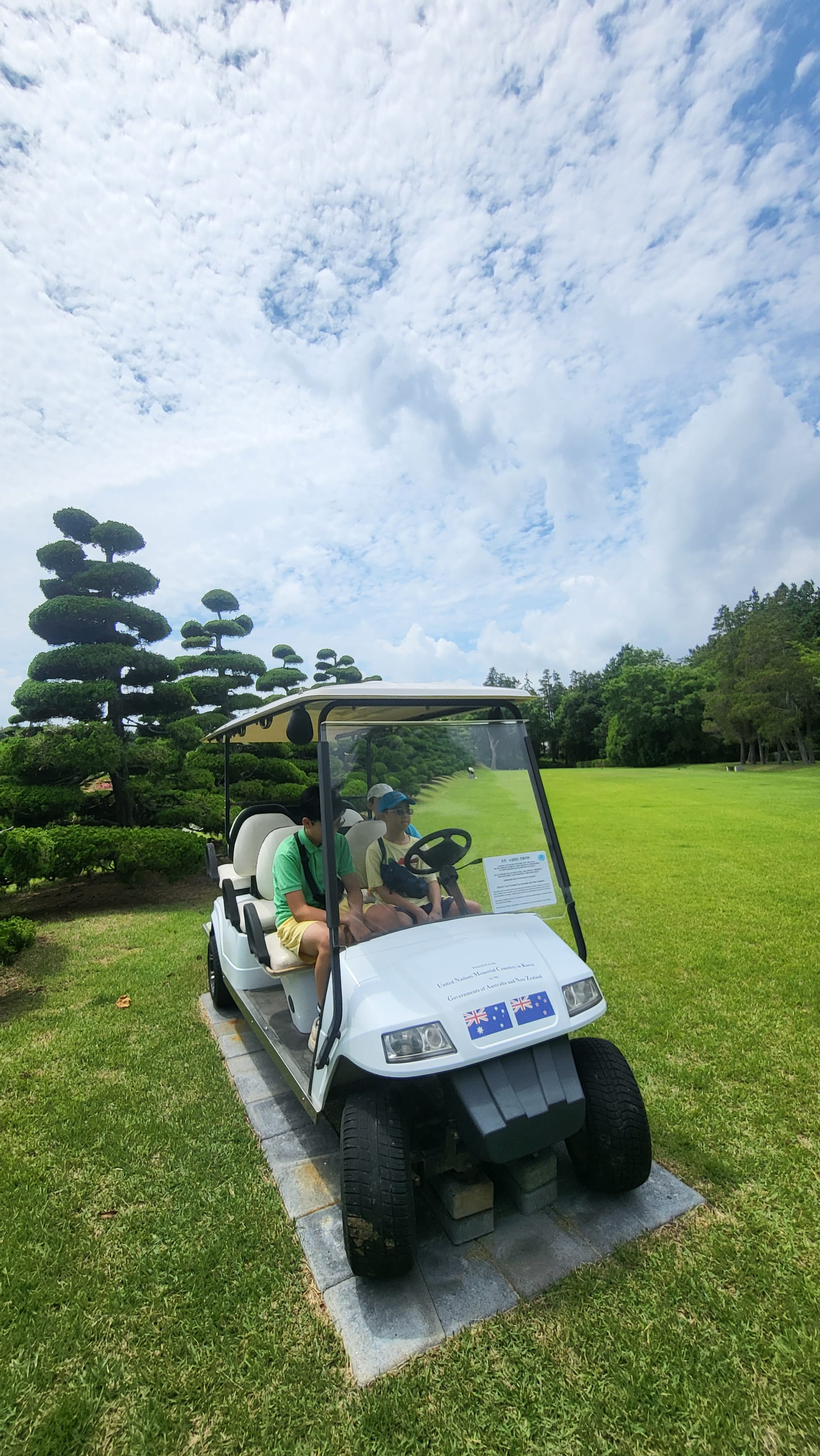
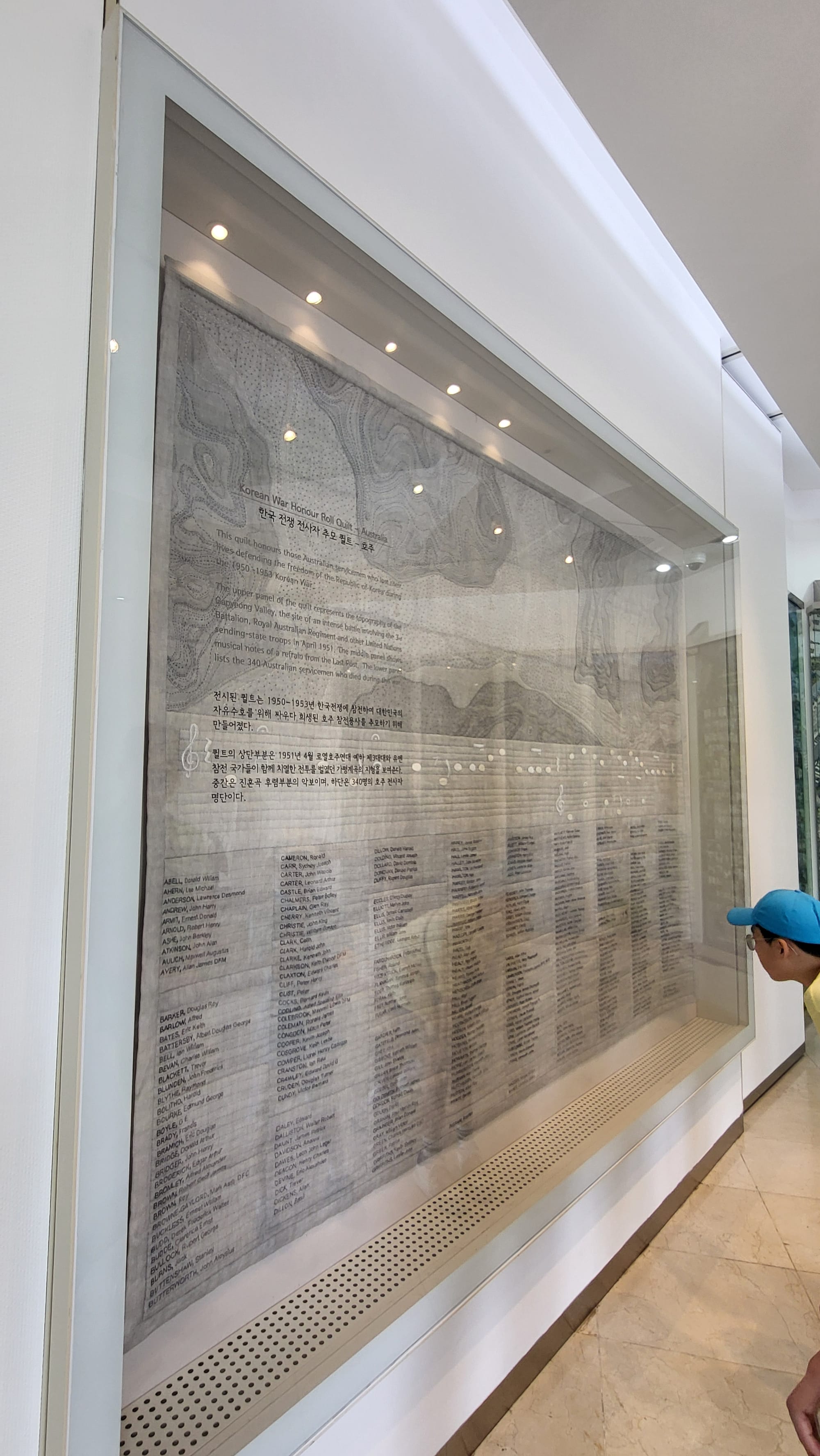
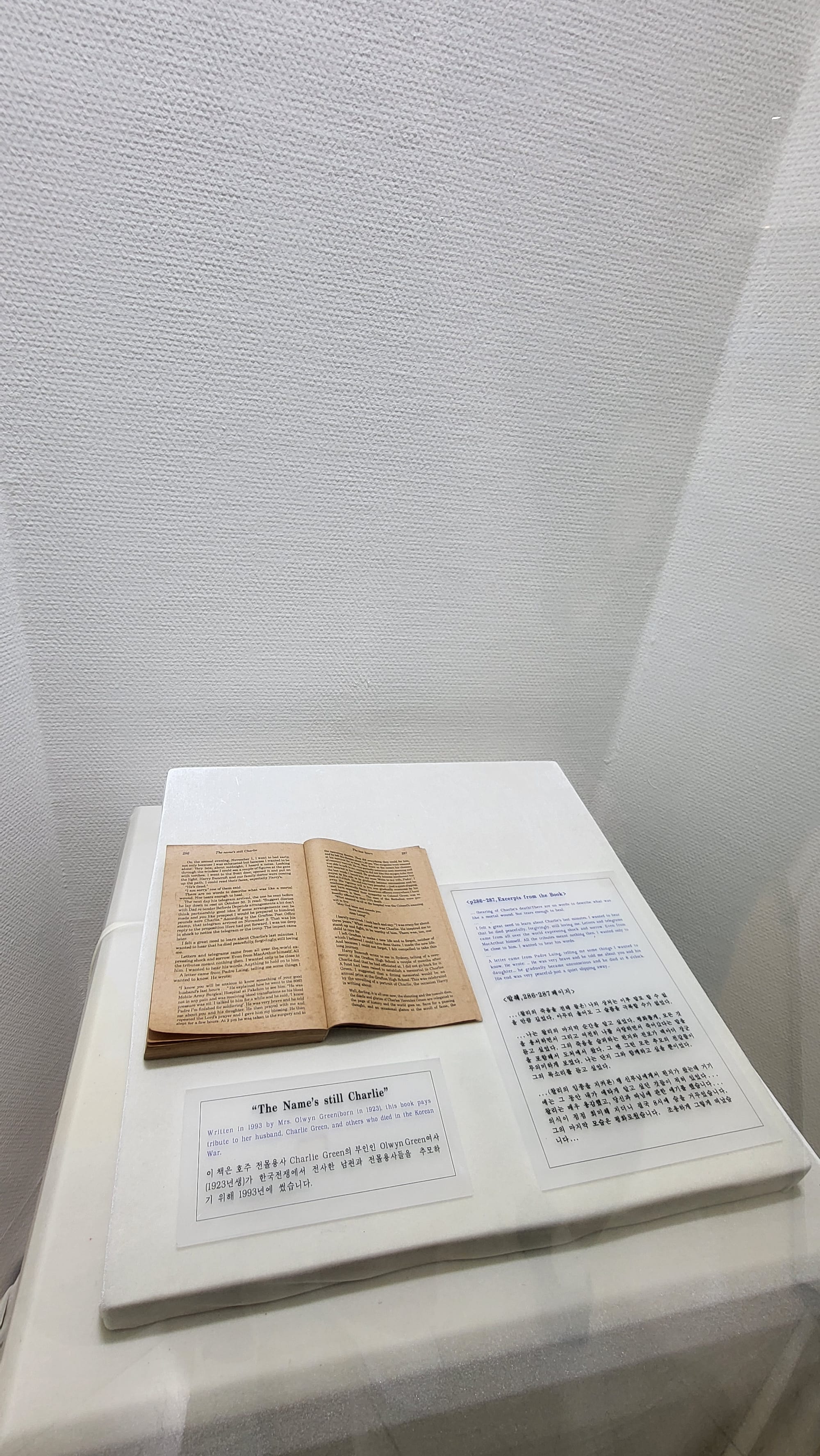
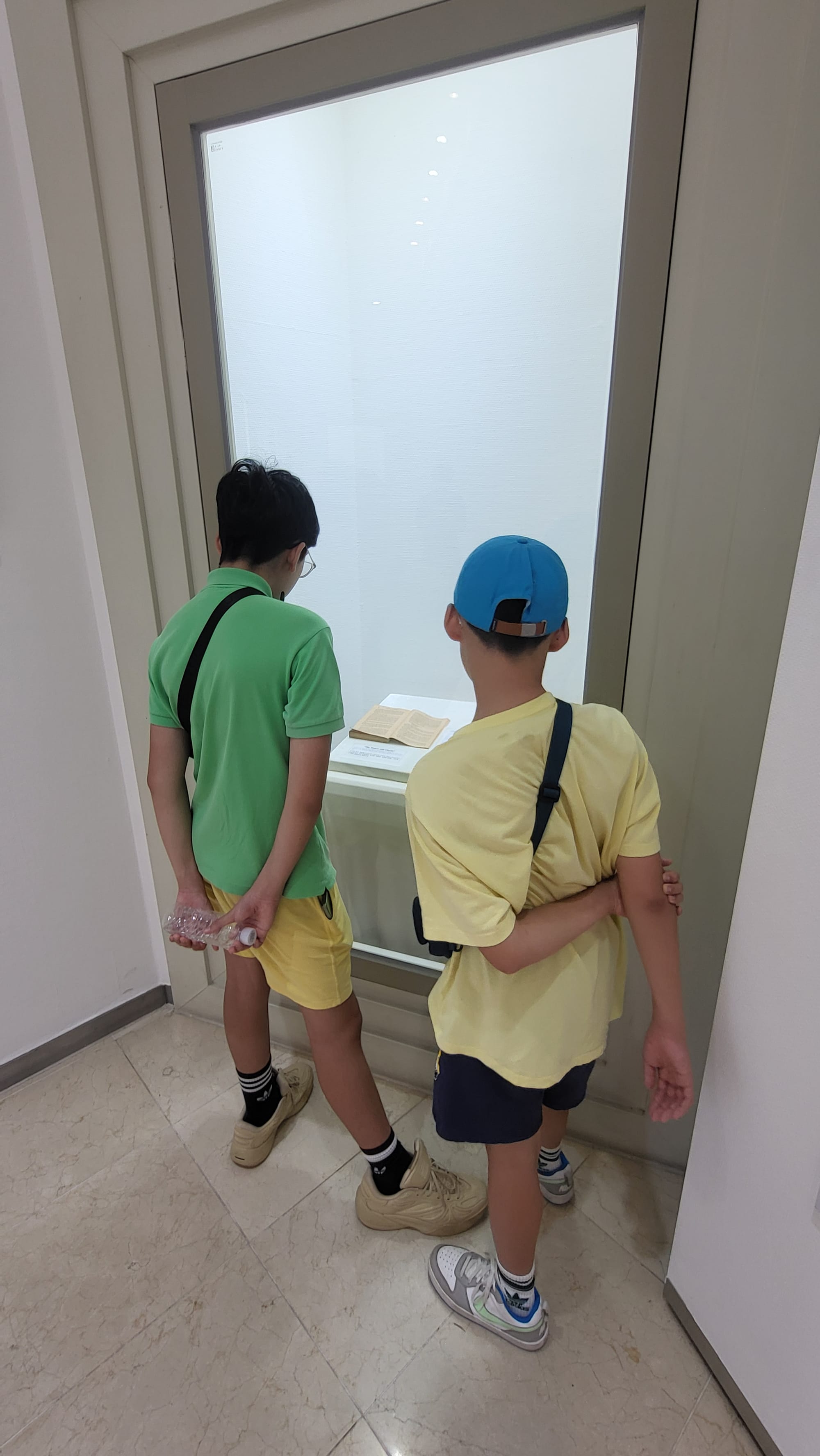
The Australian government donated a golf cart for UN veterans to use on the cemetery. Nowadays, I don't think there are any veterans left to remember this place. Instead, we were invited to sit in the seats which once held veterans. In the Memorabilia Hall, we also saw a quilt with the names of some Australians in the Korean peninsula, commissioned by a woman widowed by the Korean War. Another woman wrote a book, paying tribute to her husband and others who had died in the Korean War.
From the moment we entered the gates, the terrain looked packed with gravestones, each placed equally apart, with the flags of the countries they had served planted beside them. It was the predominantly blue Australian flag with the Southern Cross that interested me the most. I looked down at the headstones of the Australian soldiers. My stomach dropped. Most of them were only a little older than myself and were barely old enough to enlist. I thought about the families they had left behind and of the homes they would never return to. I was reminded of a story about two brothers in the Korean War. When the older one found out that his younger brother enlisted, he joined to protect him. But they would not meet each other until the older one would be fatally wounded. Dying in his younger brother's arms was perhaps a memory he would never forget. The older one was interred in the UNMCK, but the younger one survived the war. In his will, he wrote that he would like to be buried next to his brother. After 60 years, they were reunited. I realised that not every soldier came to a relatively happy conclusion like the brothers: next to the main headstones lay another. I caught a glimpse of a grave lettered: "Unknown." Now, who could this person have been? This soldier had given their life for a country they had no personal connection to, only to remain unidentified, their lives and kin lost to time. Almost all of them had died far from home. Their families might never have had the chance to visit. I wondered how many of these graves had never once been visited by someone who loved them, if they still had any. We gradually left the Australian section and moved into the pathways. It was not more than ten strides before we came across a sign accompanying a waterway: Daunt Waterway.
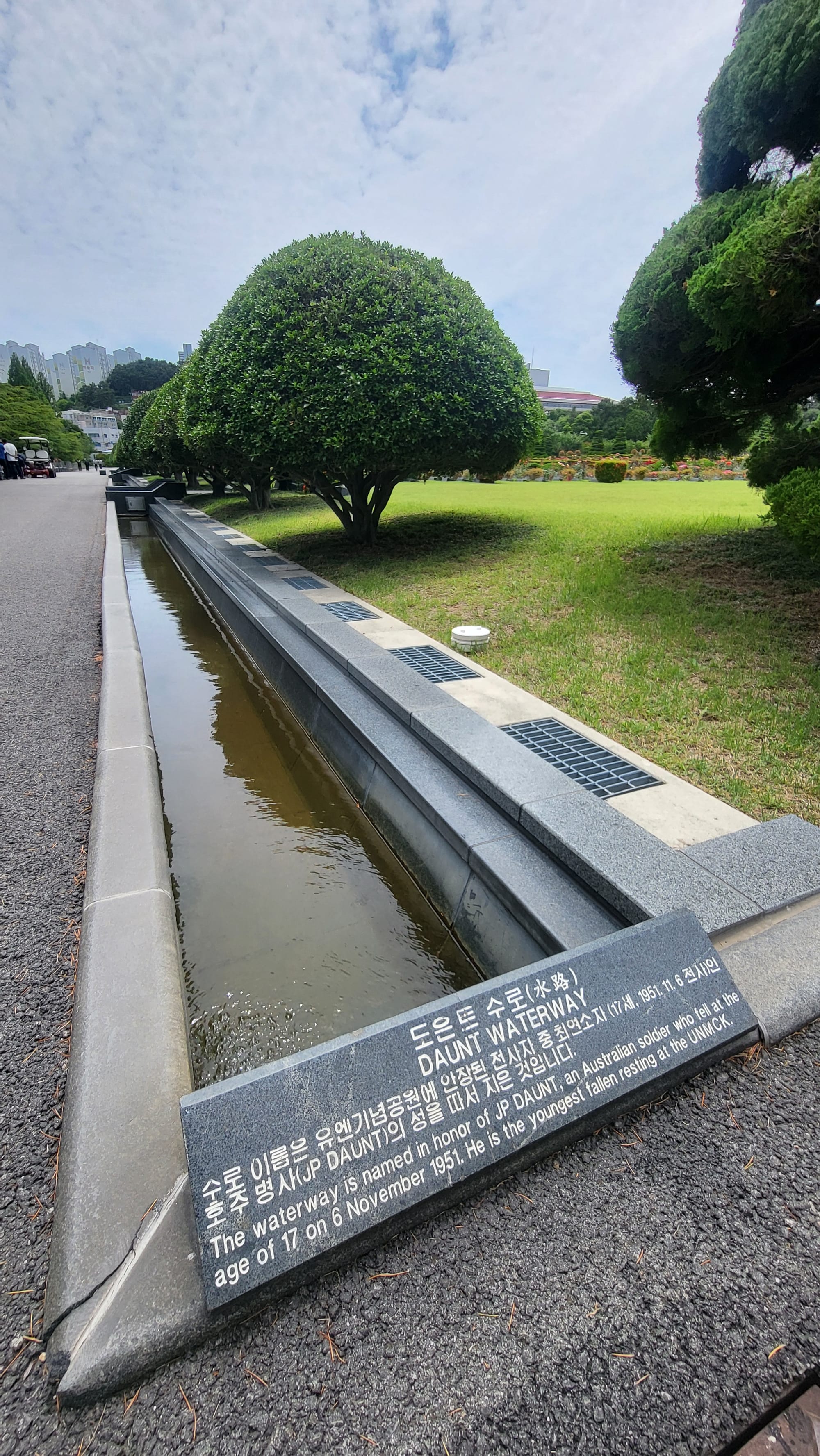
I read the sign. "In honor of JP Daunt, an Australian who fell at the age of 17 on November 6, 1951. He is the youngest fallen resting at the UNMCK." Daunt Waterway had another feature. Upon looking closer, I realised it not only had water, but fish too. We more or less followed the fish down to the Wall of Remembrance, where we then trekked towards the exit. But while my family and I were walking, my youngest brother exclaimed,
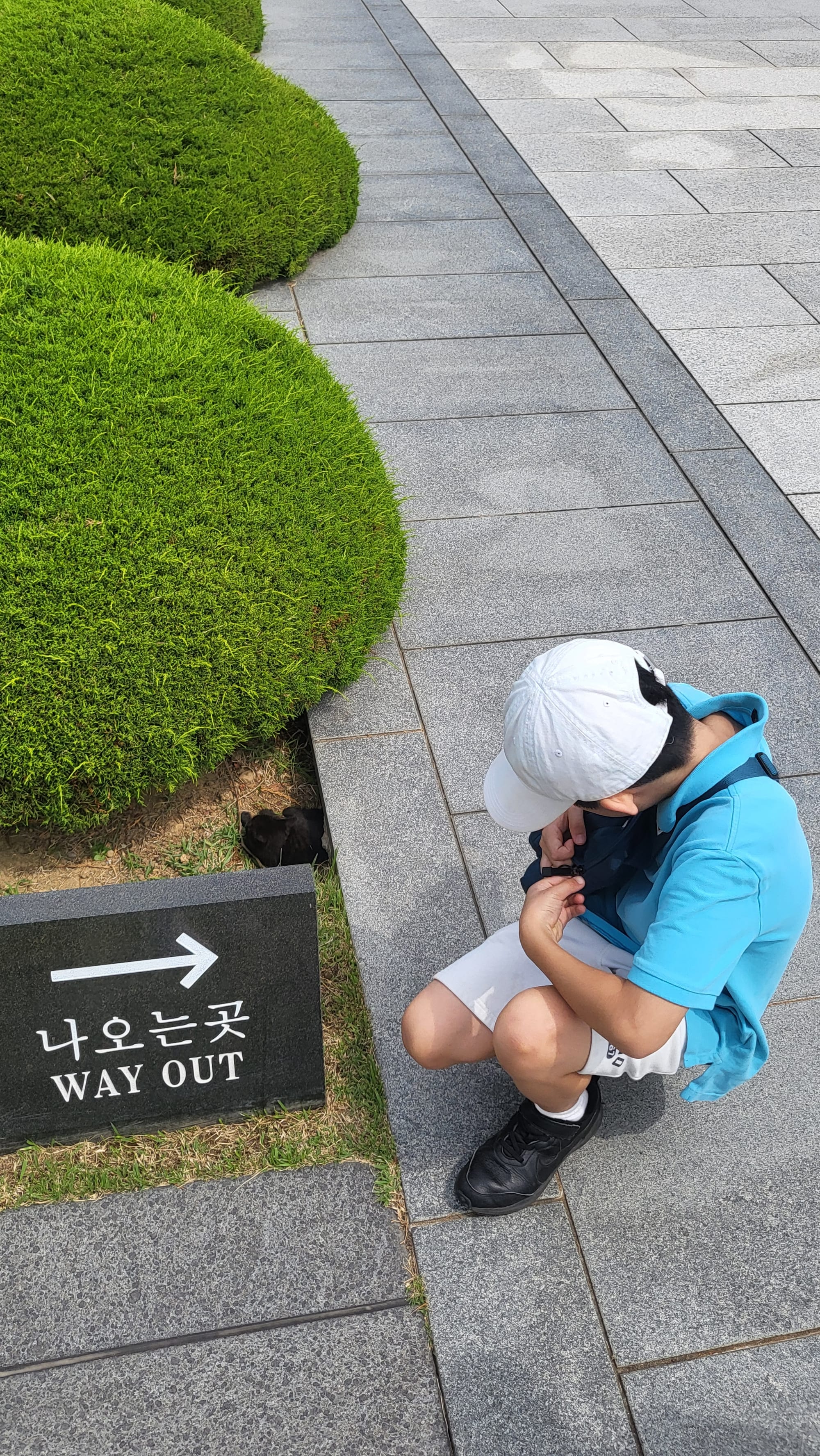
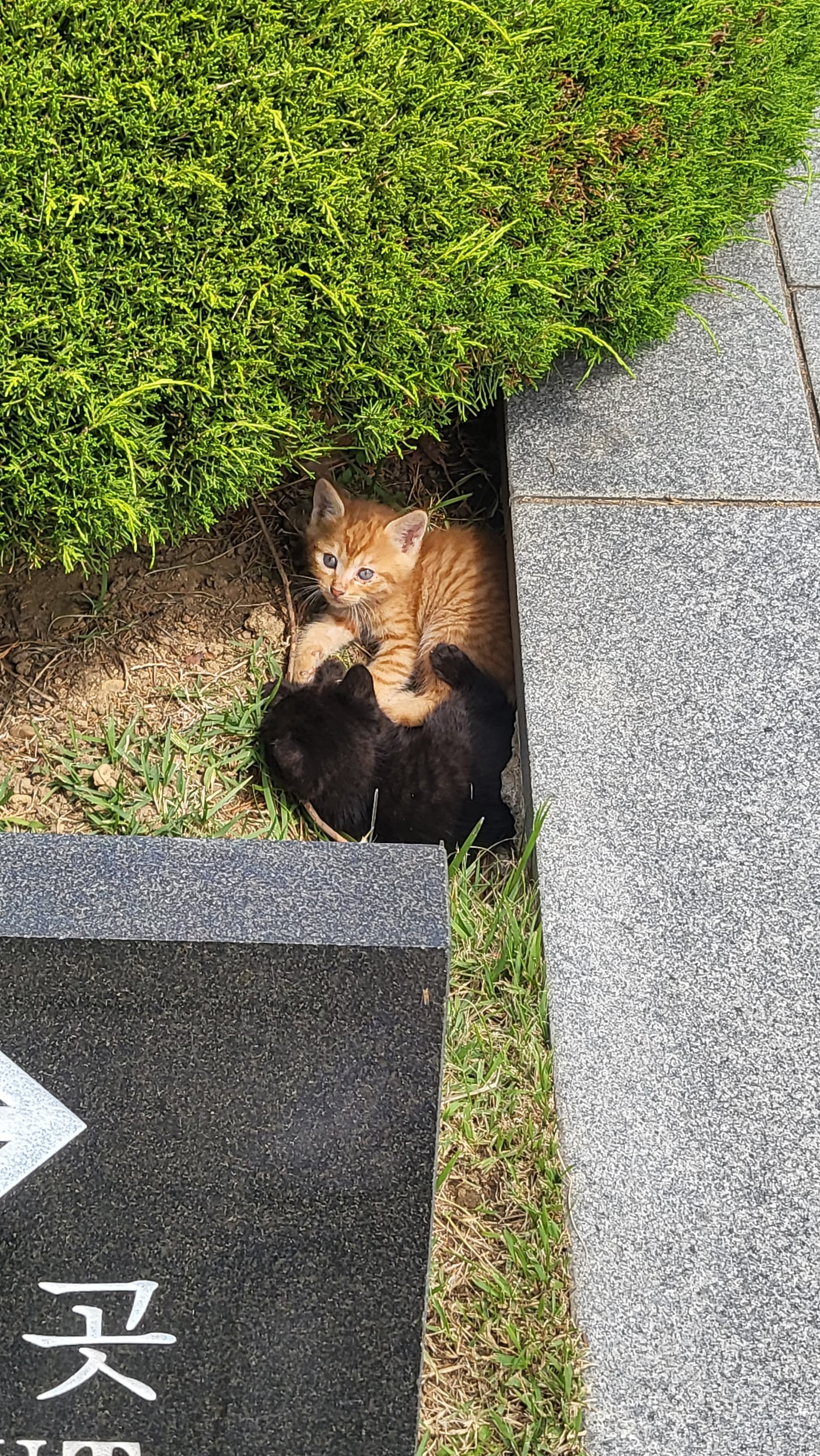
My brother exclaimed when he saw the two baby kittens under the bush.
"Look! It's two cats. Ohh... so cute! Can we adopt them?" Tucked under the bush were two kittens—one ginger, the other black—barely bigger than my palm. They were using the grounds as their home. In a place where the deceased were buried, life bloomed, like that of the fish and kittens. This felt poetic.
We stood there for a while.
And yet, it seemed like my family and I were the only ones who witnessed it. I hope more people get to know about this place—not as a tourist attraction, but as somewhere quiet to reflect on. “Did you go to Shinsegae? Haeundae Beach?" I replied. “Yes. But I went to the place I remember most. It's the UN cemetery.”
Member discussion